|
David Rosenthal We had no idea Ritchie Blackmore was ending Rainbow! 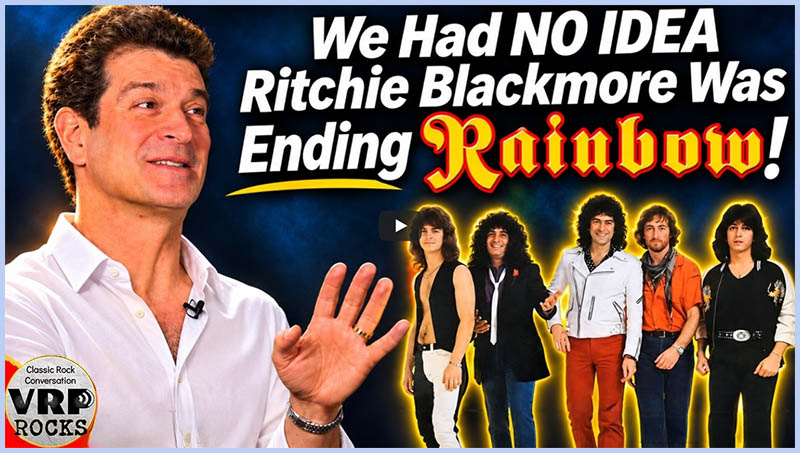 Imagine being just 20 years old and getting the chance to join Ritchie Blackmore in Rainbow. That's exactly what happened to David Rosenthal in 1981 and it started with a rather unusual audition tape. In this interview, David's going to take us inside his years with Rainbow from what it was like working with Ritchie, the freedom to create the music video era, the pranks that used to get played, and the unexpected end of the band. How did you got the gig in Rainbow? Well, a friend of mine at Berklee, I was just finishing up Berklee at the time. My friend of mine knew a friend of Ritchie's and that's how I found out that he was looking for a keyboard player. And I knew that he was classically influenced, so I put my Berklee recital on there with all these crazy list pieces and really complex stuff on one side of the cassette and the other side of the cassette was my cover band that I had at the time and we were playing the music that was popular then, Foreigner, Styx, Kansas, the Cars, all that kind of stuff. And so he liked it and invited me down to audition. So I went down to Long Island and it was a cattle call audition and so he narrowed it down to me and one other guy. Gave us each a call back the next day and then he said, "Well, we'll have him in the afternoon for 3 hours and we'll have you in the evening for 3 hours and then we'll decide who will get the gig." So, yeah, I beat the other guy out. It went good. It must have gone good indeed, so when you get a call back then from from Ritchie, I mean, what was that first conversation like? That first meeting? I mean, cuz he obviously he was a huge star even back then, wasn't he? Sure. So, he was already a household name and it was a very big opportunity for me at 20 years old. I had learned a bunch of the songs, but really a lot of it was jamming. And he and I just clicked musically like right right away. And he would play some riffs and I would play them back and we would trade and that went really good and that ended up becoming part of the show eventually. And we just really clicked musically. I think both of us loving rock and roll and having classical background and the combination of those two. I just got where he was coming from musically and vice versa. So, we hit it off right away. And when you think of some of the keyboard players that he played with up to that point like so Jon Lord and Don Airey and Tony Carey, did you feel any kind of pressure stepping into those shoes to live up to what had been done before you? I didn't feel pressure. I actually felt I was lucky to listen to all those players ahead of time and whatever they all have in common is what Ritchie Blackmore likes in a keyboard player. So, I did my homework leading into the audition and of course I was very inspired by Jon Lord as well, so I just went into the audition and was myself and it just worked. It clicked with Ritchie and it was good because I as you mentioned I was only 20 years old and I found out about a year later that there was an argument between Ritchie and Bruce Payne, his manager at the time. Bruce thought I was too young to join the band and fortunately for me Ritchie won that argument and said nope, he's my guy. I think he's going to be good so and you know, it worked out. Wow, that's something, isn't it? Having Ritchie backed for you when it comes to something like that for such a young age as well. Yeah, I didn't know it at the time, but I heard that story later. Another interesting thing that happened in my audition, Roger Glover was running the audition and he was kind of leading the whole thing. And he came up to me at one point and he said, "Okay, so imagine we're on stage now in front of 20,000 people and Ritchie broke a string and you have to fill space: Go!" Okay, so I just played something on the organ, played something funky on the clavinet, did a few leads on the minimoog. I just played a little bit of this and a little bit of that. Roger told me sometime later, you know, 6, 8, 10 months later, he said, "I was the only guy that actually played something when asked." And I said, "Really?" And he said, "Yeah, everybody else had an had an excuse or a story. Oh, don't worry about me, I'll be prepared for when that happens." Or don't worry, I won't crack under pressure. Everybody had something to say, but he said I was the only guy that just started playing and they didn't really care what I played. They just wanted to see that I was fearless and confident to figure something out no matter what might be thrown at me. So, I thought nothing of it at the time. He said, "Play something." So, I played, but it was interesting to hear that later. Very interesting indeed, yeah. And obviously your connection was very good there with Ritchie. He batted for you at a young age, but he's known for his pranks as well, isn't he? So, with you being the new guy and you being the young guy, did you face any particularly difficult moments when it came to Ritchie and his prankster sort of ways? Well, I wouldn't say they were difficult, but there were some pretty funny things, Ritchie is definitely a prankster and yes, I was the new guy and I got the new guy treatment like everybody in Rainbow did to who came before me and after me. But one that sticks out in my mind was we were recording the Straight Between the Eyes album and we were recording at Le Studio up in Morin-Heights and the studio and the guest house where we stayed were both in the woods about a quarter mile apart. And we each had our own room. It was like a big giant house. We were all staying there and I was working when I late at the studio. Must have been maybe 2:00 a.m. when I finished. I just was doing keyboard overdubs. So, I walked back to the guest house. And this is the dead of winter. This is maybe 60 miles north of Montreal. There's 3 ft of snow on the ground. And it was freezing out. So, I get in and I walk into my room. I just want to go to sleep. And I open the door to my room and there's absolutely nothing in the room. No furniture, no bed, no nothing [laughter]. And I was like, "Okay." So, I look out the window and there out in the snow is my entire bedroom with the bed made and everything, set up like a bedroom out in the snow. And that was the prank for that night, which is kind of funny. And they were waiting up hiding for me, to see my reaction when I came home. So, then Ritchie had the crew who had done all the work. He had them all go out and bring everything in, but it had been out there for 5, 6 hours. So, I had to sleep on the floor that night. There was no way I'd be I could get in a bed that would been out in the snow for 6 hours. Oh, my word. And I suppose you've not to show that you're angry about that sort of thing. You've got to play along, haven't you? Exactly. You know what? In all fairness, it was pretty funny. I laughed it off and he did some other things over time. But most of the time I just laughed it off and eventually he moved on to the next person who would be freaked out by it. 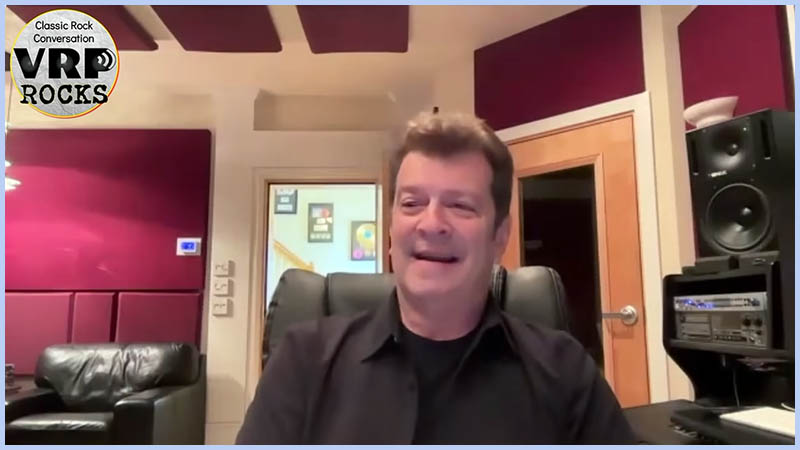 You mentioned Straight Between the Eyes there. You've said that you spent much of that kind of recording sitting in the control room and learning the process and seeing Roger Glover at work as well. So, what were some of the biggest things that you learned from watching Roger produce that album in particular? Well, I learned a lot about production from watching how the whole thing went down. I went out on a limb and asked Ritchie if he would mind if I sat in the control room and watched the whole thing as a fly on the wall and much to everybody else's surprise, he said yes. I didn't think, if you don't ask... maybe it would be okay. I don't know. So, yeah, I learned, I was there through most of his guitar overdubs and I watched how he did the edits and when Joe Lynn Turner was doing his vocals and I enjoyed it, of course, and learned a ton about the whole production process and I also made friends with the engineer and I asked him if I could take back to my room at night the manuals for all the equipment in the studio. So, I was like, well, I did that's a piece of gear. I don't know what that does. And then I would sit with a flashlight at night we reading the manuals. So, the next day I knew how that worked and it was a great learning experience for me. I didn't get in the way at all. But I'm very grateful to Ritchie for allowing me that opportunity. Now, on that record you've got a songwriting credit as well, Miss Mistreated. How did that song develop then and what was your contribution to it? Well, most of the songs developed from jamming. Before we went up to Le Studio, we had a house in Vermont and we were all staying in this gigantic house with all the gear set up in the living room and we would just jam every day and most of the riffs were incepted by Ritchie and some of the songs were kind of somewhat finished and some not. The idea was never to finish them completely but to go in with a lot of ideas and finish them in the studio. And so at the end of the album I probably contributed to a lot of stuff but Ritchie thought my contribution to that one was more substantial. So, he was nice enough to give me songwriting credit on that. So in terms of when you coming up with stuff like this and I don't know, Richie asks you to play a solo on this track for instance, I don't know, Death Alley Driver or whatever. Do you have instruction from him? Does he say how he wants it to be or does he just leave it completely up to you and and let you see what you can come up with? Well, in the case of Death Alley Driver, he just said, "Hey, you know, we'll do a keyboard solo here." And it was planned out when we did the arrangement and we knew it was going to start, it was going to have that whole interlude section and so I had a few chances when we were jamming to come up with some parts but I mean that's when I drew into my experience of listening to Jon Lord solos and listening to all the Rainbow keyboardists that came before me and what type of solo would it needs to be exciting. I wanted to do something on the synth and something that sounded really rock and roll and edgy with a lot of attitude and that's what came out [laughter]. It's what you hear today. I remember speaking with Tony Carey about his intro to Tarot Woman on the Rising record of course and you got your chance to be in the limelight with the start of Can't Let You Go of the Bent Out of Shape album didn't you? So how did that come about that kind of drawn out intro for that song? For that one Ritchie said he wanted an intro reminiscent of Bach's Toccata and Fugue, a very famous piece on pipe organ, so I thought well I have this really cool pipe organ on an Emulator one I was using back in those days, they had just come out, and had a really cool pipe organ on it and I improvised that intro pretty much and it just that's what I played I thought well this something like this it's reminiscent but it's not stolen and it sort of set up the song and it just worked but yeah he asked me to come up with something and I improvised and that's what I came up with. Is that a kind of a one take or is it a 20th take or how does something like that work? It was quite a few takes. I don't think it was 20 but I probably did three or four passes and that was the best, there's a bunch of phrases there and the best of the phrases that I came up with each one of them were then put together but each one of those phrases was improvised. So when you look back now what comes to mind as one of your favorite kind of keyboard parts from any of the songs that you worked on then? Well, I'm very proud of that intro in Can't Let You Go. A lot of people got to hear what my background is from classical. I'm very proud of the solo in Death Alley Driver. I thought it worked perfectly in the song. But it's doing a record like that with a band like Rainbow, it's not just about my moments. It's about the whole thing. I mean, Joe Lynn Turner sang amazing. Ritchie played great. Everybody in the band, there was a lot of great chemistry. And when you're part of a rock band like that, it's not about me. It's not about my moments. It's about how does the whole thing as a sum total work? And I thought that record was really well done. It came out great and it all worked. At that kind of time MTV was really enormously important, wasn't it? And Rainbow had songs and videos for songs like Stone Cold. Death Alley Driver we spoke about. And Street of Dreams, Can't Let You Go. These were all big hits on MTV. So, how comfortable was Ritchie when it came to making videos like that? Well, Ritchie didn't like doing videos. He knew he needed to, so he went along with it. Like in the Street of Dreams video, he's hardly in it. And he appears and and disappears and so, as a result, none of us were in it very much either because he didn't want to be in it. So he went along with it, because he knew it was necessary, but he didn't really enjoy the process. I had never done a video before. I mean, I'm a trained musician and I was totally comfortable playing, but nobody ever stuck a camera in my face before. So, that was a quite a new experience. And then, as you mentioned, it was right in the beginning of MTV. And the Stone Cold video got played to death. And then, later the Street of Dreams video got tons and tons of play. So that led to the popularity of Rainbow. And it was an exciting time with the beginning days of MTV. And it was really fun to be part of that. Obviously MTV, as you said, was huge and everyone's watching that. Everyone's seeing the band. They're seeing you. So, you start getting noticed when you're out and about as well. So, how does it feel for a young guy like you to suddenly get this kind of level of fame? Well, I was enjoying it, but I was more worried from day to day, well, where are we playing tomorrow? What songs are we doing? What do I you know, I'm always focused on doing the best I can with my performances, with my sounds and everything. And of course, it was fun to see that stuff on MTV and have all my friends and everyone throughout the industry. And of course, MTV helped bring Rainbow into prominence, particularly in the US. And in those days, how much you were on MTV was sort of a barometer of your success at that time. So, it was really fun to be part of that whole thing. But everything was new to me at that time. I was, you know, 21. I'm doing my first world tour. Got to play Madison Square Garden for my first time. And the Scorpions opened for us, which was interesting because they would went on to become much bigger than Rainbow. But it was all exciting times, I was focused on what I needed to do for being a good band member. And doing what I needed to do. So, I never let any of that stuff go to my head at all. I just kept on focused on my gig. So, rounding off Rainbow, 1984, Budokan, Tokyo, very famous venue. And it turned out to be Rainbow's last live show for many years. Ritchie, Roger rejoined Deep Purple. So, did you know this was on the cards? Was there any inkling that this was going to be the end of of what you knew Rainbow to be at that point? No, we knew nothing about it. Obviously, Ritchie and Roger had it in the works for some time looking back on it. But the rest of us knew nothing of it. And so, the plan when we finished an album, we did a tour in those days, and when we finished the tour, there was usually a break, and then we reconvened and do another album. And had there been another Rainbow album, I certainly would have done it. But instead when we got back from Budokan in Japan, that turned out to be the last gig, but we didn't know it. And we got a call I don't know, maybe a few weeks or a month or so later saying that Ritchie was going to put Deep Purple back together, and that was the end of Rainbow. So, how do you react when something like that happens to you? You get the phone call to say that that's it, Rainbow's finishing, you're going to have to go out and find a another job or another band or another gig? Or so, how do you feel at that point? Yeah, well, I mean, I understood from his perspective why he would want to do that. So it's not like I was fired or anything like that. As I said, I would have done another album and another tour if that's the way it went, but it didn't. And so, it was time to move on and to see what would come up next. And I had met a lot of people and it was a lot of people were aware of who I was and what I do. And so, I started looking for a gig. And maybe a few months later, I connected with Little Steven and ended up doing his Voice of America tour. © Vintage Rock Podcast - November 2, 2026  |