|
Ritchie Blackmore Rainbow Revisit 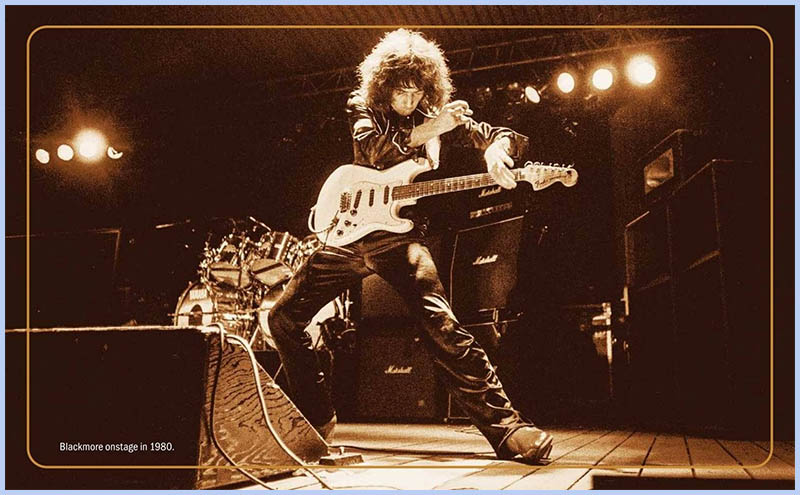 Ritchie Blackmore's melodic shadow will forever loom large on guitar rock, and the new box set, "Temple of the King 1975–1976", is a nine-CD trove that includes remasters of the first two Rainbow albums, numerous live recordings, rarities, remixes, and studio rehearsals. It also comes with heavy-duty reading material and a bounty of memorabilia and photographs. Most importantly, it features Blackmore and Ronnie James Dio, on fire. Congratulations on the "Temple of the King" boxed set. The remasters of Ritchie Blackmore's Rainbow and Rainbow Rising really pop. It's like time-traveling back to 1975. I think we all wish we were back in 1975 (laughs). What do you remember about leaving Deep Purple? I was petrified. I had to leave the great monster. I wrote a letter putting in my notice. I didn't want the band to think I was joking, so I wrote down how I felt. I was at odds with Ian Gillan. He and I are two alpha people. I think he wanted it to be his band, and I'm used to directing a band on my own. We were at loggerheads. Another factor was the touring. I couldn't take the traveling. It had become a phobia for me; I find it very difficult to go anywhere and stay in a hotel because the slightest noise wakes me up. I used to wear earplugs; I tried everything, but couldn't get over it. 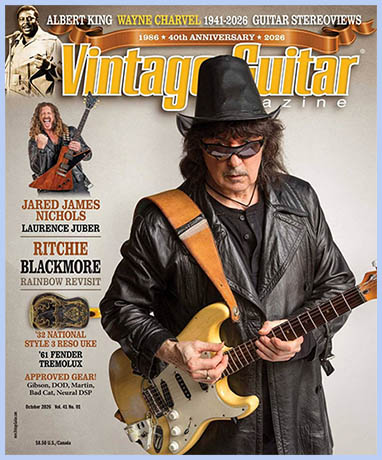 Were there deeper issues? I felt the whole band had become spoiled. Our manager would try to put together a tour. He'd say, "How about January?" "No, I've got a wedding!" "How about February?" "I'm going away on holiday!" And it went on and on. We got to July and still couldn't make something happen. I thought, "I don't understand this band. The music should come first." I thought, "Maybe I should get a keyboard player and a drummer and do another band." I wanted to do a song called "Black Sheep of the Family" by the band Quatermass, who were friends of mine. It was done by a Liverpool band called The Big Three – a very good guitar player with an excellent singer. When I heard my drummer friend Mick Underwood playing that at school, I said, "That's a great track!" Mick was the guy who brought me to Ian Gillan; I was looking for a singer, and that was the beginning of Deep Purple. What did you especially like about Ian? When I heard Robert Plant sing at the Mothers Club in Birmingham, I realized I had to get a singer to compete with that almighty voice. Ian looked like Jim Morrison and had the scream. He was perfect. Toward the end, the two of us were butting heads because we both like to be in control. [Deep Purple] were all very educated people, and I was the idiot in the band, from an academic point of view. I was unknowingly looking for people who were a little stupid, but good, musically. What was different with Ronnie James Dio? When I did "Black Sheep of the Family" with Ronnie, we did it so quickly that I thought, "Wow! I'm not used to this!" I was used to spending at least a week in the studio, usually to do the drum track. It would take us two weeks to finish a song. We finished "Black Sheep of the Family" in an afternoon. I thought, "This is how other bands record? They do it, get on with it, and that's it?" I wasn't used to that. Were you still in Deep Purple when you recorded "Black Sheep of the Family?" Yes. I presented that song to Deep Purple and Ian Paice said, "If we don't write it, we don't get the royalties." I said, "Right, but that shouldn't keep us from playing the song." He had no interest. That was yet another mark against being in the band. I thought, "This is ridiculous." After working with Dio – running a session in an afternoon and finishing it... I wasn't used to that. I was tired of traveling to Argentina, then Japan, and then Norway. It was overload. I loved going on stage, but the traveling put me off; I would get nauseous and have panic attacks. What do you remember about recording the first Rainbow album? My only regret was that I recorded "Man on the Silver Mountain" too slow. I wish I'd done it faster. I was so excited that I'd finished something without Deep Purple. Before, I was handcuffed to the monster, and this proved that I could do something on my own. I found a sense of relief. On "Rainbow Rising", I knew I could do it on my own; I just needed the right players. That's when we got Cozy Powell and changed the personnel completely. Jimmy Bain came in later. The remaster of "Stargazer" sounds awesome. It's one of my favorite tracks. I was into this philharmonic, Eastern-symphonic rock. Nobody else was doing that. The scales were slightly different – it was like a Turkish scale. So I threw that in when I wrote it. Dio was very helpful and empathetic with me. He knew what to sing, and helped me with certain instrumental parts. That was surprising because I never got that from the other band. Whatever I came up with is what we did. So, I had someone helping me with the instrumentation. It worked out well, but there's no bass on it (laughs). I was in Japan when it was mixed. I was a bit cross with our producer, Martin Birch. I called him and said, "There's no bass! What the hell is happening?" They tried to add a dB of bass on the pressing, but it always bothered me. It sounded too trebly. Do you remember what kind of gear you were using? I was playing 100- and 200-watt Marshalls. I had quite a few. I took my Vox to the Marshall guys and told them, "I want your amp to sound like this." The Vox had a great distorted sound, and I wasn't getting that with the Marshalls. They stood there with soldering irons, taking out resistors, putting in capacitors, trying to get me that sound, but they never got it. I play very loud. Jim Marshall would come down and say, "I knew you were here." In the end, they put my Vox into a Marshall combo (laughs). You're usually photographed with Stratocasters, but you're a 335 guy. I spent the first few years with Deep Purple and Rainbow with a Cherry Red ES-335 with dot inlays. I loved that guitar, and there weren't many of them. I left it in England when I left in a hurry; I had to migrate to America for tax reasons. Taxes in England were 82 percent, so my accountant said, "You have to go to America." I said, "Oh, I don't like going there! It's too big." I left a lot of guitars in England. God knows where they are now. I hear one of my Gibsons is in a showcase in Cleveland. It took me a long time to get used to a Strat because Strats are edgy. I liked the sound Hendrix got, so I kept playing it, but I wasn't comfortable for two or three years. I shaved the wood between frets to make it concave so I could get more leverage when bending a note. I've always done that. On Gibsons, it wasn't important because they had bigger frets. Were you an effects guy? Never. I like to plug in and get my sound without effects. I didn't use echo or things like phasers or flangers. I played straight, which I suppose can be quite boring in a way, but that's how I came up. I turned the amp up to overdrive and that was it. I was too much into figuring out what I was going to play. I didn't want a pedalboard to reduce signal and make it sound thinner. In Japan, I remember John McEnroe coming up to my roadie and asking, "How many effects does Ritchie use?" The roadie said, "He doesn't use effects." McEnroe said, "He must! I can hear them!" I always thought the amp should sound the way you want it to sound from the beginning, and I didn't want to mess with it. Are you aware of your influence on the guitar community? Not particularly. Tell me – my ego wants to hear it (laughs). There are guitarists who dress like you, scallop their fretboards, and play guitar very much like you. They hold your 1974 California Jam performance as the pinnacle of rock guitar-dom. I've always been a bit frustrated at that performance. I was so angry about things going on backstage that I didn't play well. I was irritated and couldn't just relax and play. What do you play now? I'm playing mostly acoustics. I collect Alvarez guitars made by Yairi. He made me some custom guitars that were fantastic. What's the deal with you and Renaissance music? I got hooked on it way back in 1972. Deep Purple would play, then I would go back to the hotel and listen to Renaissance music. People would say, "What the hell are you doing? You're a rock-and-roller!" I would say, "Only on stage." I love anything having to do with the 1500s. I've acquired mandolas, nickel harps, hurdy-gurdys, which I can kind of play to impress, but I'm not that good at it. Strains of that sound run through your rock catalog. It's always there. Even on songs like "Sixteenth Century Greensleeves," which is rock, but it always has that theme, which is not too far removed. At the same time, I'm not a purist. I love to hear pure Renaissance music, but I don't play it. It answers my brain, and I try to relate it to the instrument in a rock way. The Baroque and Renaissance eras lend themselves to rock composition. Bach was always in the back of my head. When I took guitar lessons, they were teaching me Bach. I was like, "Wait a minute... I want to sound like Buddy Holly! I don't want to sound like Bach." Later, Bach moved me and I became a big fan. I knew everything by him. Not that I could play it – it was too disciplined for me to play properly, so I went off into left field. But it was always there in the back of my mind. I loved the way Bach moved from one chord to another, and those deep minors. Most of the guitarists I'm impressed with are country players, and they usually play majors. Those guys are phenomenal; I love Albert Lee, who is one of my favorites and a good friend. But I'm taken by the minors. I think maybe that has a little bit to do with Johann; he was into those dramatic minor chords rather than the happy. I don't want to sound happy. I want to sound sad and miserable (laughs). When I first started Deep Purple, I wanted to have an image. I wanted to be one of the characters in the Hammer horror films. Those were my favorites. Not Vincent Price so much because he used to smile a lot. But the other guys. I wanted to take that image and be a bit of a monster – a weirdo. Like Christopher Lee. Christopher Lee – perfect! But it seems to have gone crazy, because now people see me as that weird guy who doesn't smile... I like it. I worked on that image for so long. Everybody in the band was doing interviews, being jolly and smiling, and I thought, "I have to adopt a different character." The live shows from Germany on "Temple of the King" are mind-altering. I'd been in jail for five days and hadn't slept in five nights. How did that happen? This girl came up with a note for the band, and I saw her get hit over the head by one of the security people. I thought, "He's not getting away with that." So, I went up and kicked him in the head. Broke his jaw. That was it. Every exit was full of police waiting for me to finish the show. My very inventive roadie said, "We're gonna put you in one of the flight cases and get you across the border." I got into the flight case and they pushed me out to the loading zone, where two police officers asked what was in the case. The roadies said, "Amplifiers." Then someone else came and said, "Let me see what you have in there!" I jumped out like a jack-in-the-box. They took me out of the case, started thumping me, then marched me off. It was not a pleasant experience. They'd put something in my food, so I didn't eat. Then they kicked me so I couldn't sleep. When I got out, I went straight onstage in Munich, and they recorded it – of all the shows to record (laughs)! I was hungry, exhausted, frightened, and very upset. When they put you in jail in Bavaria, they make sure you suffer. Maybe it helped with my playing, but I don't think so. When I went back 10 years later, they gave me the key to the city. Do you have any plans to perform again? When you're 81, a lot of medical things come into play. I can still play guitar, but I've cut back on the traveling. We want to do shows in small theaters on The Island [of Great Britain]. I could do another Rainbow tour, but I have four vertebrae that are herniated, so I'd have to go to my spine specialist for an injection. Then I could stand with a guitar. I did that on the last Rainbow outing in Europe. I've had offers to play Madison Square Garden, but I have so much fun with my wife, Candy, playing the crossover medieval Renaissance stuff. I plug in the Strat now and again and have a blast, but I'm torn between the two. Are there any new projects in the works? Candy and I have written new songs, and a producer is coming in, but they're not rock songs. I know fans want to hear Rainbow, but I want great singers. Dio was a great singer. Gillan was a great singer. Graham Bonnet did a great job on "Since You've Been Gone." Still... there are days when I say, "Let's do it!" ==== Rainbow "The Temple Of The King 1975-1976" Ritchie Blackmore's Rainbow was originally conceived as a solo project during a hiatus from Deep Purple. The guitarist recruited frontman Ronnie James Dio from the American band Elf, and the rest is metal history. "The Temple of the King 1975-1976" boxed set is a nine-CD collection documenting the band's rise and it contains remasters of the first two albums, live German concerts, and never-before-heard rarities, remixes, and studio rehearsals. Also look for a well-written 24-page booklet, rare memorabilia, photographs, and liner notes. While the book and remasters are excellent, the live recordings are the crown jewels here. Blackmore and Dio display a rare chemistry that shall never be replicated. Blackmore's massive Strat-through-Marshall tone, castle-crushing riffs, and penchant for breathtaking improvisation will alter the mind. Musical highlights include live versions of "Stargazer," "Sixteenth Century Greensleeves," and "Man On The Silver Mountain." On the classic "Mistreated," Blackmore delivers a masterclass on dynamics, milking pristine Strat tones to a whisper before ramping up into epic drama and his patented Marshall bombast. Rainbow disciples may own most of these tracks, but not the booklet and beefy remasters. The guitar heroics of Ritchie Blackmore and birth of progressive metal lie within this fine set. © Oscar Jordan, Vintage Guitar Magazine - October 2026  |