|
John O' Reilly Exclusive Interview with Strangers [Part 2] The talented drummer who parted ways with Joe Lynn Turner to brilliantly fulfill his dream of joining the "Rainbow" now opens up about the real Ritchie Blackmore 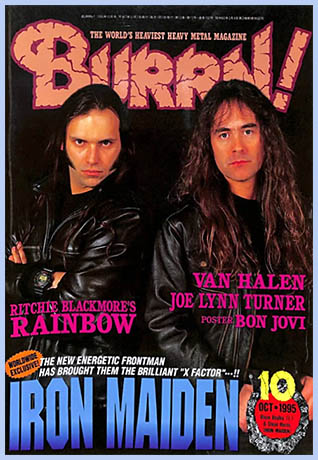 John O'Reilly first burst onto the scene as the drummer for a project called CPR, alongside Al Pitrelli (G) and Randy Coven (B). Their album CPR was released in Japan in January '93, and after that, it was widely believed he was drumming for Joe Lynn Turner's band... until he suddenly popped up in RAINBOW. In fact, right after wrapping up my interview with Ritchie Blackmore on Long Island, John O'Reilly happened to walk into the very restaurant where the interview took place. Judging by how Ritchie and Candice interacted with him, it became quite clear that John is very close with Ritchie. Regardless of his past stint in Joe Lynn Turner's band, he seems to be highly favored by Ritchie. Let's have John O'Reilly tell us how he came to join RAINBOW.
First, please tell us about your musical background and how you ended up joining RAINBOW. Sure, let's talk background. The transition period from CPR to working with Joe Lynn Turner wasn't very long. The CPR record was primarily instrumental, but the record label really wanted to include vocals. So, we had Zakk Wylde sing on one track, and Randy Jackson from ZEBRA sing on another. However, once we wanted to tour, we lacked a dedicated vocalist. Through Al Pitrelli, we got in touch with Joe Lynn Turner, and he ended up singing for CPR. He sang with us for about two months. Then, toward the end of the CPR tour in '92, I attended the NAMM Show in California, where Joe Lynn Turner invited me to join a new band he was trying to put together. Al was committed to doing WIDOWMAKER, and Randy Coven was heading in a different direction, so once I became available, we formed the JOE LYNN TURNER BAND. The main goal was just to have fun playing clubs, and that's exactly what we did. We didn't have any concrete plans to make a record or anything specific. It was just Joe Lynn Turner, Al Pitrelli, bassist Greg Smith, and CINDERELLA keyboardist Gary Corbett playing clubs all across America. We kept touring the club circuit for a year and a half, nearly two years. Right in the middle of that club tour, Joe received a phone call from an old contact from his DEEP PURPLE days, letting him know that Ritchie had left DEEP PURPLE and was looking to form his own band. When we heard that news, Greg Smith and I looked at each other and thought, "Wait a minute... could this mean something?" We never viewed Joe's band as a permanent, settled thing, and every member was involved in other projects anyway. I was doing other session work and writing music for TV commercials I was playing. I really wanted to get in touch with RAINBOW or Ritchie, but I couldn't get any information regarding them. I couldn't find anyone who knew anything either. Ritchie was changing his management at the time, so nobody could contact him, and I didn't even know how to go about getting an audition. However, in February of '94, when I played a benefit concert for the family of the late Ray Gillen, the singer of BADLANDS, I ran into Jim Manngard there, who was Ritchie's personal assistant at the time. Jim and I were just casual acquaintances from parties and concerts before that, but he called me aside and said, "Ritchie is looking for a drummer. Are you interested?" Bumping into him at that club at 2 AM was a complete coincidence. I gave him my phone number and he said, "I'll be in touch," but since I didn't have his number, I wasn't sure if he'd actually call. I kept waiting for the phone to ring, but since no word came, I went back on tour with Joe. While we were stopped for a bit in front of a club during a show in Ohio, in the Midwest, someone Joe knew came onto the bus. That person turned out to be one of DEEP PURPLE's tour accountants. I was sitting with Joe in the front lounge of the bus, and when Joe asked, "How is Ritchie doing?", the guy replied, "Ritchie's doing great, and his new management has been decided..." When Joe asked, "Who is managing him?", he said it was Joe Boyland of Legend Artist Management. As it turned out, I knew all of those people! (laughs) Everyone in that office. That's because I had made a record with a woman named Lucia, Joe Boyland's personal assistant, and a band called STAIN. At that exact moment, it flashed through my mind: "I've got a connection!" So the day after I got home, I called Lucia. She made all the arrangements and even prepared a tape, which she then sent over to Ritchie. Running into Jim Manngard was a total fluke, and knowing Lucia, who worked at the management company, was a complete coincidence too. After a few phone calls following that, I finally went in for an audition. That was in April of '94. Is that so? I completely assumed that Ritchie had kept his eye on "Joe's band" from the start, with the intention of teaming up with Joe... I see... Actually, we had asked Joe, "Should we contact Ritchie and find out what he's up to?", but at that point, Ritchie was already playing with a completely new band. The drummer and the bass player were completely different. Because of that, I figured his band was already locked in, and initially, I didn't think I'd even get a shot at auditing. But as it turned out, I was actually the second-to-last drummer to be auditioned. Meaning he didn't like any of the drummers up to that point? He tried out a lot of guys, but none of them worked out, and apparently, Jim Manngard strongly urged him to give me a call. In the end, Ritchie got frustrated and said, "Just call your friend," and that's how I went to the audition. When I first got there, it was a really unusual setup. He was extremely focused on whether my timing was perfectly steady, and he told me to play something very simple. Something like this... (snaps fingers to keep time). I just kept the rhythm going on and on while Ritchie sat there staring, tracking me like this. He listened to me play solo to make sure I wasn't slowing down or speeding up. He did that at various tempos, and after about two or three minutes of it, he signaled to the other guys and we started jamming. We improvised right on the spot, playing at different tempos and in various grooves. That was my actual audition. We didn't play any proper songs at all. Later I got a phone call, and when I went back for the second time, we only played "Man On The Silver Mountain" once. On top of that, right around the halfway mark, he just said, "OK." (laughs) It was vastly different from a standard audition. 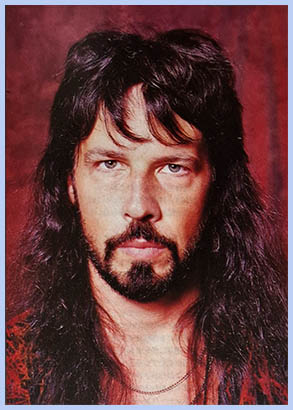 When exactly did you officially become a member of the new RAINBOW?
That was... April of '94... the day before Ritchie's birthday. The day before April 14th. When listening to a bootleg of a live show the JOE LYNN TURNER BAND did in the summer of '94, Joe introduced you as "John O'Reilly from the RITCHIE BLACKMORE BAND!" (laughs) Oh yeah, that was funny. By the way, I just finished making a new record with Joe. Yes, I'm aware of that. Greg Smith plays on it too, right? It's a very good record. It's different from a standard rock record; it's R&B... because he is incredibly good at singing in that style. Actually, I'm interviewing him tomorrow. Oh, really? Al Pitrelli co-produced it. People who live on Long Island all know each other well. The musician circle is tiny; practically everyone knows everyone, and they all work together in different combinations. It really is a small world. Being over here in Japan, it's a bit hard to wrap my head around how you and Greg are doing both Joe's record and RAINBOW at the same time... Making Joe Lynn Turner's record was a completely natural thing. Greg and I first asked Ritchie and management for permission to go work on Joe's record. If they had said, "That's a bad idea," we wouldn't have done it, but everyone gave their full blessings. Because we know each other inside out, it's much better than playing with complete strangers and stressing over "how do I communicate my ideas..." That's especially true when it comes to the bass and drums. When Greg and I do it, it goes hundreds of times faster. Greg and I have been playing together for a long time, and I play in Joe's band with Al, and of course, Al and I played in CPR. So a shorthand for communicating ideas has already been established between us. We know what each other is thinking and what we're trying to do. When you play with musicians you don't know well, you first have to break through a barrier before you can truly communicate what you want to do. When everyone shares the same sense of humor, everyone understands each other. Even if someone speaks up and says, "That's not good, let's not do that," nobody gets offended and we can just move forward. We know they aren't saying it to attack anyone. Could you explain to us why Joe isn't the singer for RAINBOW? Did he just miss his chance? It's the result of both of them understanding that human beings naturally move in different directions. If you listen to Joe's record, it should be explicitly clear that his way of singing is entirely different from a RAINBOW record. It's a completely different style from Doogie's. Joe is moving in a different direction; his interest in R&B styles has grown much stronger. Meanwhile, Ritchie has always loved working with new people. It gives him new ideas and new input, and Ritchie believes that by constantly working with new people, he can push himself to work just a little bit harder. He is always expanding his horizons and growing. Joe and Ritchie are still friends today, and they understand each other. They've simply grown in different directions. I've had the same experience. I used to play with Al and Randy in CPR, but eventually, shifts happened for all of us, we started moving in different directions, and we began working with other people. Playing with friends is fun, but if that's all you do, you lose out on new challenges. Working with new people or people you don't know forces you to try new things, and it makes you a little better at what you do. It's not like Joe just missed an opportunity. What direction did Randy Coven head into? Jazz? For Randy, his roots style was jazz. From there, he got involved in fusion and instrumental music. When I first joined the band with him and Al, it was an instrumental fusion band, but once we started adding vocals on the CPR records, I eventually felt like forming a more traditional band after that. Something with an alternative edge. Personally, I wanted to do something like PRIMUS. Randy is incredibly talented and has a very percussive bass-playing style, so I thought it suited that vibe perfectly. But he leaned more toward wanting to do a band with a vocalist that had an alternative sound, along the lines of PEARL JAM or ALICE IN CHAINS. So he teamed up with some other guys and formed a band called HOLY MOTHER. I heard Randy playing his new music about two months ago, and it was completely different from what we were doing in CPR. Just like he wanted, it was alternative music with traces of PEARL JAM and ALICE IN CHAINS, built around a percussive bass style. When listening to the CPR album, it made me think you might have come from a jazz background...? When I first started playing professionally back in '72, I was a jazz drummer. My very first record was an album with a pianist named Earl Fines, and I made one record with him. Then, between '73 and '75, I played in a highly jazz-influenced band called J.F. MORPHINE SALT. I had actually been with that band since '67, when I was 15 years old. In the beginning, I was just a roadie moving the gear, but in '72, they asked me to join the band. That was when I became a professional drummer, and from then until about '87, you could say I was a fusion drummer. However, I was taking on a lot of other work around me as well, and I noticed that it was confusing a lot of people. You don't get asked to do many rock gigs if people look at you as a fusion drummer. Once they figure out you're a fusion guy, they assume, "Oh, he probably doesn't like this kind of music," or "Since he doesn't like it, he won't be able to play it..." The fusion market in America is extremely limited, but the rock market is massive. So, I made a conscious decision not to become famous specifically as a fusion drummer. Parting ways with CPR was also a move to clarify my involvement with Joe Lynn Turner. That way, everyone would recognize me as a rock drummer. I can play jazz, funk, and fusion, but I needed everyone to know, "This is what I am doing right now." It worked out well. (laughs) Have you ever been to a RAINBOW concert in the past? Yeah, I've wanted to be in RAINBOW ever since '77. They're my favorite band. As a matter of fact, Bobby Rondinelli, who drummed for RAINBOW for about two years, is a friend of mine, and Bobby actually played in a band that I had just left. When Ritchie discovered him, Bobby was playing in the exact band I had been playing in right before. I remember thinking, "I can't believe something like that happened!" I felt like I had missed a massive opportunity. I was a huge fan of both RAINBOW and DEEP PURPLE, and I always wanted to have the ability to play in RAINBOW, so for me, this is a dream come true. No matter how long it took, I made sure that when it finally became reality, I would be completely prepared. I wanted to be the exact kind of drummer Ritchie was looking for. What Ritchie wants in a drummer is someone who can rock out, but at the same time, swing. He looks for that style in a drummer's playing. It's not just a jazz swing; it's being a player who can incorporate anything, rather than playing in just one fixed style — someone who can blend styles in a very subtle way. Fortunately, that comes naturally to me. And when Ritchie listened to my playing, he noticed that and said, "I like this guy." My dream came true, and I'm incredibly lucky. What do you think of Ian Paice's playing? I would think he is one of Ritchie Blackmore's favorite drummers. Oh, Paicey and Ritchie are almost like childhood friends. They've known each other for ages. For Ritchie, leaving DEEP PURPLE was incredibly painful in many ways, but it was particularly tough because he was so close with Ian Paice. When business and friendship get entangled, you stop talking to each other directly, and things become very difficult. Ian Paice has a powerful jazz background, and that's exactly why Ritchie enjoyed playing with him so much. He can do rock, and he can swing. That element is deeply important. Cozy Powell can play like that too. He's a rock drummer, but he can swing and shuffle. It's vital. Ian Paice has been a massive influence on me. Whenever DEEP PURPLE was playing somewhere or appeared on TV, I always watched, but since Ian Paice is left-handed, using him as a model is incredibly difficult. I had to mentally flip everything he was doing to fit a right-handed setup, which completely threw me off. (laughs) I’d be thinking, "Since he's going this way, I have to go the opposite way... wait, what is he doing?" But of course, I loved watching him play and listening to him on records. He influenced me greatly. I'm a massive fan of his. At RAINBOW concerts, Cozy Powell always used to perform flashy drum solos, right? Oh yeah, that "1812 Overture" was his trademark. Have you thought of any ideas for your drum solo? Not yet. But Ritchie has already told me to have one ready. He asked me, "I might tell you to do a five to eight-minute solo, would you mind?" and I told him, "Of course I'll do it," but I don't know which song or which section it'll happen in yet. Bobby Rondinelli used to throw his sticks away in the middle of his drum solo and play with his bare hands. Yeah, he played with his hands. I actually ran into Bobby two weeks ago. He had been playing with BLACK SABBATH, but now Cozy is playing with BLACK SABBATH... I don't know what Bobby is up to right now, but maybe he's teaching drums. I've known Bobby for a long time. For a while, even Bobby was incredibly curious about how the new RAINBOW was coming along. He showed a lot of interest. When I listened to this new RAINBOW album, I thought the drum sound was spectacular. Obviously, Ian Paice is an excellent drummer, but I was disappointed with the drum sound Ian Paice had when he was playing with Joe Lynn Turner. Though his charm returned later on... Actually, I went out to buy DEEP PURPLE's newest live record the other day, but I couldn't track it down. The newest record I own is The Battle Rages On... Capturing a great drum sound is difficult. Even if it sounds fantastic inside the studio without running through any electronics, during the recording process, as you layer guitars, bass, keyboards, and vocals on top of it, the drum sound shrinks, and the layered elements end up sounding huge. I think that might be what happened on recent DEEP PURPLE albums, because his raw drum sound is magnificent. The recording engineer plays an incredibly vital role; what the final drum sound turns out to be is entirely up to him. I was extremely lucky to be able to work with Pat Regan. We tracked this record at "Long View Farm Studios" in Massachusetts, inside a very large, elongated room, and the microphones were placed way back at the far end of the room. It created a massive sound. Pat Regan is incredibly skilled at crafting a spectacular drum sound. Of course, the sound of the drums themselves has to be good too. Getting a great "thump" instead of a flat "thud" sound is extremely hard. Before you even start recording, you have to ensure you're getting a magnificent sound right there. I think Ian Paice's sound on The Battle Rages On... wasn't bad. They could have made it a bit bigger, but... Did you listen to Slaves and Masters? No, I never had the chance to listen to it. I only listened to "King Of Dreams" because we played it during Joe Lynn Turner's live shows, but that's about it... I think the drum sound on The Battle Rages On... was much better than on Slaves and Masters. These days, getting a great drum sound is deeply important. That's why you need a stellar engineer. First, you need a spectacular drum sound to begin with, and the engineer receiving it needs to fully understand which microphone goes where, and where in the studio to place the drums to get the absolute best sound. Then, during the final mixing stage, they have to know how to keep that sound massive, so that even when you layer guitars, vocals, and bass over it, the track retains enough presence. Every single sound needs to come out sounding big. This is an incredibly difficult task because within the actual audio spectrum, some sound inevitably has to be sacrificed. DEEP PURPLE and the old RAINBOW were famous for recording in castles, or renting out hotel hallways and private houses, but did the idea of recording in an unusual place like that come up this time? Yeah, originally we had rented a large mansion in upstate New York, and we set everything up in a massive living room. The ceilings were incredibly high too. We set up there and experimented with the sound. We hung massive parachute cloths all over the room, looking for spots that would create a lightning-fast echo. Castles and massive houses aren't designed for recording, so you get these strange angles that generate weird echoes. Since things like that have a massive impact on tracking a drum sound, we hunted down those spots anywhere in the room and pasted down small cushioning materials to neutralize the effect. We intended to record there, but the mobile truck we planned to use for recording wasn't available during the window we wanted it. We wanted a place where we could live and record simultaneously. Instead of a standard recording studio where you start at 10 AM and finish when midnight rolls around, we hunted for a place we could utilize 24 hours a day, so if someone struck an idea, they could immediately walk into the studio and track it. But finding a place like that is difficult. Eventually, we found a place called "Long View Farm Studios" in Massachusetts. It's a massive property, and it was incredibly popular back in the early '80s — The Rolling Stones rehearsed there, and the J. Geils Band tracked there. When DEEP PURPLE considered using it two years ago, there weren't enough rooms for the band and all their families to live in, so they passed on recording there. Apparently, that became the catalyst for them deciding to build more rooms on the property, and by the time we went to check it out, it was absolutely perfect. You can record 24 hours a day at any time, and you can literally live on the premises. All you do is walk up the stairs, and you're right where you play. You drink some coffee, eat breakfast, head up, and the work begins. It truly is a setup where you have a recording space right inside the house. We were incredibly lucky to find a place like that. I stayed there for two months and tracked the drums. There are plenty of musicians who try to control absolutely everything themselves, but how is Ritchie? Did he give you detailed instructions? No, Ritchie is incredibly open-minded. However, what he demands is strict because he expects a lot from the person he's working with. He gave me a ton of freedom and let me play however I liked. He doesn't sit next to you handing out detailed directions like "do this, do that." The only thing Ritchie demanded of me during this recording was "busy playing." I gave it my best effort, but it was pretty tough. At his request, I played some outrageous drum fills on a few tracks. I executed some incredibly busy drum fills. He said "OK" and I focused on delivering busy playing, but along with producer Pat Regan, those drum... When I was tracking some drum fills, Pat said, "I don't think this is good, it's way too busy." So I listened to him and followed his advice. However, when Ritchie came back later, he said, "Do more, throw in a lot more fills." (laughs) So that time I tried doing exactly what Ritchie asked. Then Pat chimed in, "No, not like that!" (laughs) After going back and forth like that for a while, we eventually ended up incorporating a little bit of each of their requests. So in the end, I couldn't put any truly mind-blowing drum playing onto this record. I tried my best, but I had to listen to two completely different opinions... (laughs) Of course, I tried to play in a way that I myself would be satisfied with. But what both of them were saying was ultimately meant to make the song better. It's about what the song truly needs. It's not just about playing flashy stuff. Flashy playing is fun, though. As drummers, we always want to do that kind of thing. But I had to constantly think about what kind of playing actually suited this particular song. But from what you're saying, it sounds like the communication between Ritchie and Pat Regan wasn't going very well...? No, it wasn't like that. Ritchie leaves people to handle the areas they excel at. He'll come in, make a suggestion like "Why don't you try doing it this way?", and then he'll just leave. He walks away. For instance, even when we record something and want him to listen to it, he won't come into the control room. He stands outside the studio with the door cracked open a bit, listening from there. That's how he listens to things. He knows that if it sounds clear outside the studio, it'll sound clear inside too. He just thinks differently than most people. It's a completely fresh perspective. Personally, I always listen right in front of the speakers and say, "That wasn't good, let's do it again." Ritchie always asks for my opinion. He asks, "Are you happy with your performance?" He never says from his side, "That's good enough, let's move on." He always listens to my input, and he absolutely never barks orders in the studio. He didn't do that even once. He prefers not having to explicitly tell the people around him, "No, this is what I want you to do." He expects you to perform at your absolute best without him saying anything. He looks for free, spontaneous input from the people around him. It's not about standing behind someone giving micro-instructions like "Don't do that." He has never been that way. Not many people know the truth about him like that. Of course, his standards are high. He demands high-quality work. He hired me because he believed I could deliver, so he naturally expects me to do that job at all times—to always deliver my best work. A lot of people say that "Ritchie is a massive egomaniac, and if you don't do exactly what he tells you, you'll get fired," and that image has widely spread, hasn't it? Yeah, I know. But it hasn't been that way with me. When Ritchie tells me something, regardless of what it is, I give him my opinion and let him know what I think. Especially regarding my own performance, if I feel I didn't play well, I don't try to fake it. Even if others tell me it's fine, I'll say, "No, that wasn't good," and if I hear something I don't like, I always speak my mind. I've always been that way, and in my interactions with him, he has respected that. That's just how I operate. As for the ego issue, I haven't walked in his shoes, so I can't speak from his standpoint. He has been doing this job since the '60s and has had a truly spectacular career. When you're working at this level, you need an ego to survive. I also know that Ritchie is someone who finds it hard to make close friends. That's because he has been deeply hurt in the past by people who got close to him just to use him and then talk trash behind his back. Because of that, he is very guarded around people. To truly understand him... to understand his sense of humor, it takes time. He is a truly seasoned joker. It takes time to get to know him. But as long as you speak your honest feelings and give him what he's looking for, you'll be completely fine. I am here to give him 110% of what I've got. And I'm just happy if he values me both as a person and as a player. There are so many different stories floating around about him. You know them all, right? It's crazy. It cracks me up because I've actually worked with him and know the real truth. Once we hit the road on tour, it'll become even clearer. From the very beginning of the auditions, through rehearsals, songwriting, living together with the band members, going out to pubs, joking around, and singing — I've been deeply involved in the entire creative process, and I recorded with him too. He hasn't changed at all. He has been exactly the same the whole time. So are the people who claim Ritchie is difficult to work with simply those who couldn't deliver what he was looking for? That's definitely a possibility. I take my job very seriously. This is my life, and this is what I'm meant to do. Every single day I thank God for the happiness of being able to make a living playing drums, and for the sheer luck of working with someone I've wanted to play with for ages. It's a dream come true. Seriously. Because I had heard all those rumors, I didn't expect everything to be completely rosy. When I joined the band, I wondered, "What is it going to be like working with Ritchie?" Whoever I asked would say things like, "You'll find out once you try it. Give it six months and your attitude will completely change." Everyone said the exact same thing. But as time goes on, I haven't felt any shift at all. If some kind of change does happen... though I don't think it will... if I become lazy, or turn into a massive egomaniac, or become difficult to work with... if anyone in the band starts feeling that way about me, I'd probably get beaten to a pulp by them. (laughs) Hearing that makes me really happy. As a huge RAINBOW fan, I hope that you — as both a spectacular drummer and someone who truly understands Ritchie — remain the drummer for this band for a very long time. I hope so too. For me, being involved in work like touring and recording is incredibly fun, and I'm especially thrilled to be doing creative work in this band. I'll probably keep touring for another two or three years, and once the touring wraps up, I'd love to focus on what I wanted to do before joining RAINBOW, which is doing a lot more recording work. While doing these activities and touring is incredibly fun, it makes maintaining the relationships that form the foundation of your personal life very difficult. I want to think seriously about those things down the road, so after the tour winds down in two or three years, I'd like to settle down, record albums, and lead a proper family life. Because that is deeply important. Have you ever been to Japan? No, this will be my very first time. I'm really looking forward to it. After all, I've never even been to Europe before. For me, it's going to be a journey packed with entirely new experiences. It's incredibly exciting. Especially getting to go there as a member of this band. It's not like we're loading our gear into a van and driving there myself! (laughs) The Japanese fans are definitely going to spoil you. I've already been spoiled. Economically, I've experienced every single level of life. I've been homeless before, then I managed to make a basic living, then moved up to a good life, and eventually reached where I am today. I never want to go back to how things used to be. By the way, you have a remarkably good voice. Have you ever thought about singing? No, people have told me that before, but my speaking voice and singing voice are two completely different things. I've thought about becoming a voice actor before, but singing is out of the question for me. © BURRN Magazine no 10 - October 1995  |