|
Ritchie Blackmore Special Interview with Ritchie Blackmore Revealing the details of a completely exclusive interview lasting over 2 hours all at once! The surprising truth behind the "Deep Purple Scandal" and numerous secret stories regarding the revival of the "Rainbow Legend," as told by Ritchie Blackmore directly to our Editor-in-Chief Kaz Hirose. 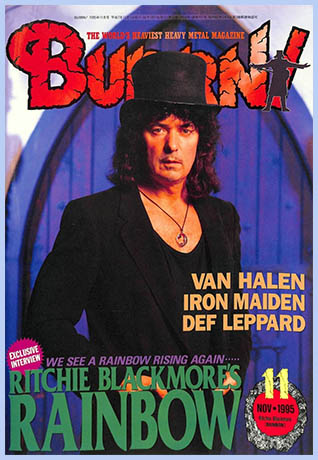 As I wrote in last month's issue, Ritchie Blackmore has proudly demonstrated that he is still alive and well by releasing Stranger in Us All under the name Ritchie Blackmore's Rainbow. I had a completely exclusive interview with him lasting over two hours at a small Italian restaurant in Long Island, New York. This took place on July 20th. I will skip the specific details of the setting since I wrote about them in my column last month, but during the interview, which began in a very friendly atmosphere, I was absolutely astonished by the fascinating facts Ritchie revealed one after another in a remarkably smooth tone. I found myself deeply frustrated that I had to hold off on publishing it until this month's issue; I could hardly wait for the day it could finally be made public.
Masa Ito, our magazine's editorial advisor who traveled to New York with me, conducted the world's first broadcast media interview, while I handled the world's first print media interview. Up until now, Ritchie had responded with total silence to the one-sided accusations and slander coming from the Deep Purple camp. During a relaxed conversation following the official interview, I told him, "At any rate, you really should speak out more and more. While you remain silent, a negative image takes root, and 'lies' get swapped out for 'facts.' It'll be too late to argue once that happens. Even though I want to keep my own coverage exclusive, as a fan, I want you to appear in as many media outlets as possible to explain your side." It was a bit of a self-sacrificing thing to say, and as a journalist, I thought it would be a bit sad if Ritchie ended up doing phone interviews left and right and his exposure elsewhere ended up dropping at the exact same time as our issue. Fortunately (if I can call it that), so far no other magazine has published an interview with him. Mind you, this is an industry where people put on an innocent face while trying to pull the rug out from under each other underwater, so I wouldn't be surprised if some magazine did a phone interview without my knowledge. But for now, at least, it remains an "exclusive." Enough of my rambling. Laying out Ritchie's actual words is precisely what Rainbow fans are dying to read. The interviewer's own musings don't matter at all. (In fact, many people are probably utterly fed up with this kind of "introductory text.") "Just get on with it already!" — I can hear myself as a reader urging it along. So, let the interview begin. First, regarding the truth behind his departure from Deep Purple... Before asking about the new Rainbow album, could you tell us why you suddenly left Deep Purple after the 1993 European tour? They have made statements accusing your actions of being unprofessional and selfish... I suppose what they say is right. They are very nice people, and truly professional... let's just leave it at that. I want to know your own reasons. 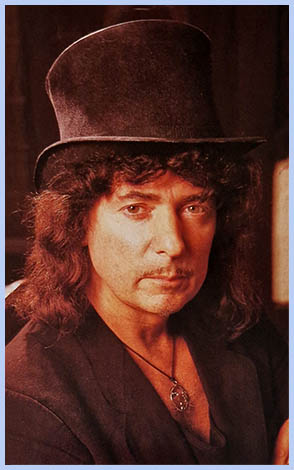 To tell you how it all started... as usual, it began with Ian Gillan. In the first place, I didn't want to be in the same band with Ian Gillan. However, we went on tour. Two weeks into the tour, I decided to quit and wrote a letter saying, "I want to leave." It wasn't just because Ian Gillan couldn't deliver the vocals anymore... rather, when it came to two specific songs, Ian Gillan wasn't singing the lyrics on stage at all. In other words, for about 10 minutes every single night, he was just making meaningless noises on stage. He would hold the mic, cough, laugh, take a drink... all while we were playing, right when he was supposed to be singing. To me, that felt completely pointless, and it made me feel miserable.
So I asked Jon Lord, "Are you aware that Ian Gillan isn't singing the lyrics on those two songs?" and he just said, "Is that so?" Exactly, nobody notice anything. Everyone is living in their own little isolated world. I guess as long as they get paid and get plenty of attention from a crowd, they don't care. But whether there are 10 people or 1,000 people in the audience, as long as you stand on a stage in front of people, you ought to sing the lyrics. It's like playing with only 5 strings when you are supposed to be playing on 6. It's completely unprofessional. That's why I was furious. To begin with, he isn't even among my particularly favorite singers. I don't think he sings very well. That's why I didn't want to be in the same band as him. So in my letter, I wrote, "I cannot work with Ian Gillan, even though the other members are working themselves to death..." I sent that letter from Finland. It was to notify Deep Purple's management: "I am quitting, so you need to figure out whether you're going to find another guitarist or what." There was a six-week grace period, so they should have been able to work something out in that time. I had no intention of going to Japan. I even tried to talk to the Japanese promoter. It took two days. And when I asked them if they knew I wasn't coming, they said, "No, we don't." When I asked, "Has nobody told you?" they said that was the case. Mind you, this was about two weeks after I had notified management. I thought the very first thing management should have done was contact them to say, "Due to these circumstances, we are bringing in a different guitarist or making other arrangements," but they hadn't done a single thing. They were just pretending as if nothing had happened. Whether they thought I would end up going to Japan anyway, or what the issue was, I don't know. I had no intention of going to a place that I respect, where people pay money to come see our show, with that band. I didn't want the audience to see Ian Gillan slacking off, laughing, making jokes, and thinking he was being funny. So I had absolutely no intention of going. That is the fundamental reason why I left that band. Ian Gillan is always the cause. And so I left. They can keep on playing, but they don't know what they're doing. The spark is gone. They're just playing. That's why I was exasperated. They have no motivation. Ian Gillan has stated, "I don't know what I did wrong. Everything was going great for the first week, but then Ritchie suddenly started ignoring me..." Oh, I don't harbor any malice toward Ian Gillan. But specifically, getting up on stage and completely failing to sing the lyrics is something I cannot overlook. Anyone can have moments when their voice won't come out or when they forget the lyrics. But he wasn't even trying to learn them. He seemed to think it was amusing to act that way on stage, but I didn't find it funny at all. And he goes out partying every night, getting drunk until 6 or 7 in the morning. Yet the band considers themselves to be highly professional. If you're going to go on stage and can't sing because your voice won't come out, why on earth are you staying up until morning? That's not professional. I don't mind people having fun, and I don't mind them partying. But if you're a singer, you need to take care of yourself. He didn't do that. And the other members didn't either. They just thought of me as temperamental and felt absolutely nothing about Ian Gillan not singing the lyrics. To them, I suppose, it just didn't matter. However, we are playing in front of a huge crowd. Massive numbers of people come just to see the band. When I see expressions on their faces wondering, Why isn't he singing? I simply cannot bear it. It's an absolutely terrible situation. That is why I lost interest in that band. The other members are living in a completely different world. They aren't in the same world as me. That's why I quit. This is the second time you have left Deep Purple, but the first time around, both Jon Lord and you admitted that there was a feud between the two of you, correct? This time you mentioned Ian Gillan was the issue, but how were things with Jon? 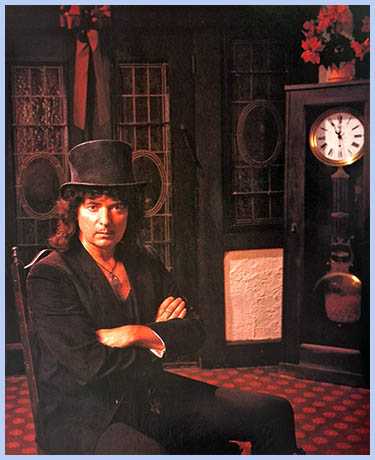 Things weren't going well with Jon either. I used to think we got along fine until he started trying to make money without doing anything. Jon is incredibly lazy. Not a single idea ever came from him. He is a very polite person and a highly skilled keyboard player. But he has zero ideas. He's always just cruising along comfortably. As long as he's playing in the band, touring, and making money, he's perfectly content. But sometimes you just want to scream, "Jon, come up with some ideas!" From a musical standpoint, because he contributes nothing creatively, I cannot respect him. Back in '71, we had a major dispute over the song "Strange Kind Of Woman." That track was written by me, Roger Glover, and Ian Gillan, but I told Roger and Ian, "Jon is probably going to want a writing credit." Roger asked, "Why?" because Jon had absolutely nothing to do with writing the song. He didn't even show up for rehearsals. I took this matter very seriously.
If someone doesn't even show up for rehearsals, doesn't that imply not only that they didn't write the song, but that they don't even care about playing it? So, when we played the finished track for him and Roger asked, "Do you honestly think your name should be on the writing credits?" Jon replied, "Of course." Roger said, "Why? Not only did you not write it, but we've been looking for you all week and you weren't even in the same building as us." Since Jon was supposed to be home, we were worried and looking for him. By "home," I mean the house in Cornwall where the band was staying and working at the time. He wasn't at the house. Becoming worried, we called the office and said, "We can't find Jon. Where on earth is he?" and they told us, "Jon is right here." What? What was he doing in London when he was supposed to be at rehearsals? I was not amused. So I decided we wouldn't give him a writing credit. When Roger went to talk to him, Jon dug his heels in and refused to back down about wanting the credit. When asked why, he said, "Because I'm a member of the band." Roger countered, "That's not fair. You weren't there when the song was being written, so there's no way you should get a writing credit." To which Jon responded, "I am a member of the band. Therefore, I deserve the writing credit, and if I don't get it, I quit." This was back in 1971. Roger came back to me furious and reported, "He says he's going to quit the band if he doesn't get the writing credit." So I replied, "In that case, tell him that I am quitting." Meaning, both of us were on the verge of quitting the band. I did not want to be in the same band as Jon Lord — not with someone who does nothing and demands money for it. That is completely unfair to the people who are actually writing the songs. It's unacceptable. Ian and Roger didn't care about any of that and just wanted to keep the band going, but I said, "This is a matter of basic human character; you can't do absolutely nothing and demand a writing credit." I couldn't stay in the same band with him... We had been rehearsing until Friday, but from Friday through Monday, I refused to answer the phone. The manager was calling literally every single minute just to see what was going on. I left a message saying, "If Jon Lord is quitting because he can't get a writing credit, then I am quitting too." Jon was trying to apply pressure, so I applied pressure right back. Management was completely frantic, panicking because they thought the band was going to break up. By Monday or Tuesday... I changed my mind and decided to return to the band and play with Jon Lord after all. However, I resolved right then and there that I would never show him respect again. I didn't speak a word to him for about eight months. We played together on stage, but the tension was immense. That's what happened when we wrote "Strange Kind Of Woman" in '71. Demanding the rights to a song written by other people, solely because you happen to belong to the same organization, is utterly absurd. Have you ever read articles claiming that there was another dispute over royalties with Jon Lord even after the recording of Stormbringer? That's completely true. What happened back then was... I can't recall it clearly unless I really force myself to remember, but let me try to recall it for you. I'm always trying to forget it. Nobody wants to hear stupid stories from the past anyway. This is a secret I usually only tell very close friends. To be honest, it's not good to talk to journalists about it because they never listen to it properly... Around the time of Stormbringer, we were starting to do things that were very funky. Personally, I liked that kind of stuff. I liked David Coverdale. Ian Paice and I were the ones who brought him into the band, because he truly has an incredible voice. Jon and Ian wanted to bring Glenn Hughes in as well, but I told them I didn't like Glenn Hughes's voice. It's too high-pitched. But they told me Glenn would play bass, so I said, "Fine, that's okay." As long as the main singer was David Coverdale, I didn't have an issue. And so we did "Burn" and "Mistreated." Those were the two songs I actually enjoyed playing. However, by the time of the next album, Stormbringer, Glenn Hughes was starting to become a star. He was into Stevie Wonder and dance-oriented, soul-style music. That kind of stuff isn't in my DNA. Yet the entire band started drifting into that bluesy direction. No, not bluesy, soul. I love the blues, but I do not like soul. They wanted to play soul music, but I didn't like soul at all. I wanted to play rock 'n' roll, so if they wanted to play soul all the time, I had no choice but to go my separate way. When it comes to the credits on Stormbringer... my philosophy was always that "whoever actually wrote it gets the credit," and I tried to put that into practice from the moment we started working with David Coverdale and Glenn Hughes. Before that, it had always been myself, Ian Gillan, and Roger Glover writing the songs, but we would split the credits equally five ways just for the sake of friendship. Ian Paice was always motivated and drove the band forward, so I wanted him to have a share. He was always the first to arrive, playing his drums and pushing the band, asking, "What are we playing today?" Jon, on the other hand, would show up late and bring zero ideas... I always regretted giving Jon credit. However, since Ian Paice was getting credit without writing anything, excluding only Jon would have raised questions like, "Why isn't Jon getting credited?" So it couldn't be helped. But when we started writing songs with Glenn Hughes and David Coverdale, I proposed that we had to establish a new contract. I said, "Let's make sure the people who actually write get the credit, and those who don't write get nothing." Naturally, Jon was unhappy with that idea. He had never written anything, so he knew it was a losing battle for him. Even so, we still had to credit his name on one or two songs just because he was sitting there playing. At any rate, the reason I proposed changing the writing credits was when I began writing songs with David Coverdale and Glenn Hughes. I told them, "It's not fair to split it five ways when only three people are writing." Jon was always late and never brought any ideas. That completely fed up with him all the time. Jon is an exceptionally talented keyboard player on stage; he has real flair. But in the studio, he had absolutely no ideas. So... that's how things were between Jon and me. The reason I left after Stormbringer was because things became far too soulful... we started playing soul music. I wanted to keep playing rock 'n' roll with a solid beat. Right around that time, I discovered Ritchie's —I mean, Ronnie James Dio— and thought, This guy is unbelievable! and I absolutely had to move in that direction. According to David Coverdale, during Stormbringer, he claimed that the only two people actually coming up with ideas were himself and you... That's exactly right. David mentioned that he opposed almost all the ideas you brought forward, saying "We've done that before, let's do something different," and he wondered if you felt "insulted" by that...? No, that wasn't the issue at all. David and I always wrote songs together, and back then... it was a lifetime ago so I can't remember perfectly, but he would usually sit at the piano and throw out ideas, which were great, but something was always missing. At any rate, Glenn was completely obsessed with soul music, so I didn't pay much attention to what Glenn was doing. When it came to writing for Stormbringer, it was either David coming up with something and bringing it to me, or me coming up with something. Tracks on that album like "Stormbringer" or "Gypsy" were written exactly that way. Come to think of it, I remember Glenn Hughes saying he didn't want to play "Soldier Of Fortune." When I asked him why, he answered, "Because it's not soul." (laughs) For a song that good?! It left a bad taste in my mouth. Then he started playing a song called "Hold On," but I didn't want to play it. When he asked me why, I told him, "Because it's soul." (laughs) I absolutely detest playing stuff like that (imitates a dancing motion while humming a light rhythm). So I told him, "If you play 'Soldier Of Fortune,' then I'll play 'Hold On'." We made that deal. So he played "Soldier Of Fortune," and I played "Hold On" using nothing but my thumb. The whole thing. I played it without using any fingers on my left hand except my thumb. After Stormbringer, when you left Deep Purple, we all believed it was because you wanted to form a band with Ronnie James Dio... That's precisely right. When you left Deep Purple, David Coverdale previously claimed that you invited him, saying, "I'm quitting to start my own band, why don't you come with me?" I was quite surprised to hear that... Is it true? No, that's wrong. I never said anything of the sort. At that point, I had already recorded a track with Ronnie James Dio. I believe it was "Sixteen Century Greensleeves," and it went incredibly well. There was something remarkably fresh about the way Ronnie James Dio sang, and I was incredibly excited about working with him. He had ideas and perspectives that were completely out of the ordinary, and it wasn't soul — it was rock 'n' roll because [Ronnie] was completely into rock 'n' roll. I never invited David. What on earth did he misunderstand? David supposedly responded, "Why should I quit when Deep Purple has the best drummer and the best keyboard player in the world?" No, I never once invited David. That wouldn't make any sense anyway. I was already playing with Ronnie James Dio. That's all there is to it. Back when Ian Gillan was in the band, you tried to leave Deep Purple a few times to do a project called Baby Face, didn't you? That's correct. At that time, you were planning to take Ian Paice with you, correct? Yes. Even so, when you formed Rainbow, why didn't you invite Ian Paice? When I was trying to do Baby Face in '71, Ian and I were very close, and he was an exceptionally excellent drummer. That's why I wanted to include him. However, by 1974, Ian's drumming had become a bit frustrating to me. It felt a bit too pushy... I felt it was disgraceful. I just wanted a drummer who could play a straight beat. Ian was distracted by meetings and other things. What about Jon Lord? Did you ever think about bringing Jon Lord into Rainbow? Oh, no, I didn't. Jon is inflexible. He’s a highly skilled player on stage, but... You dissolved the Joe Lynn Turner version of Rainbow to reform Deep Purple with the line-up featuring Ian Gillan. However, according to Jon Lord, you intended to bring Deep Purple to a quick end, reform Rainbow swiftly, and at that time, you were planning to invite Jon Lord to join Rainbow... Is that true? No, I wasn't thinking of anything like that. We made Perfect Strangers, didn't we? That's the period he's talking about, right? Yes, that's right. What did we make after that... What was the next album I made with Ian... It was "The House of Blue Light". Right. That was awful. But re-forming Rainbow was completely out of my mind. At least, until recently. I don't understand how I could invite him to join a band that I didn't even have any intention of starting. Granted, I did want to bring Joe Lynn Turner into that band, but that wasn't a Rainbow reunion. Truthfully, I wanted a different singer instead of Joe, but since I couldn't find anyone suitable, I brought Joe in. I believed Joe had the capability. Joe wasn't my absolute favorite singer, but because we couldn't find anyone else appropriate and needed someone immediately after letting Ian Gillan go, I brought Joe in. But reforming Rainbow wasn't on my mind at that time. I only started considering reforming Rainbow about two years ago. It was after I left Deep Purple this time. This time, I left Deep Purple and started Rainbow because I couldn't tolerate things that made no sense anymore. I wanted to do what I wanted to do. I wanted to distance myself from what they were doing. So Jon Lord was daydreaming. Yes. He daydreams about all sorts of things he says. But because he’s such a gentleman, everyone believes his words. There is a view that bringing Joe in as the lead vocalist of Deep Purple caused the trouble, and because the other members ultimately sided with Ian Gillan rather than Joe, you lost your place in the band... What do you say to that? 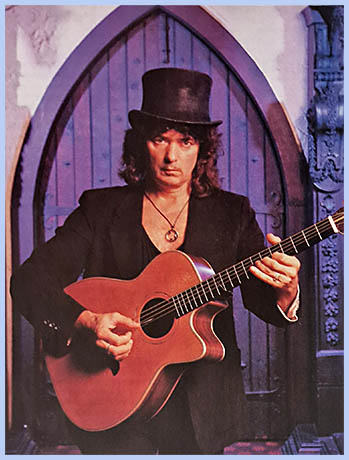 No, I brought Joe in because I let Ian Gillan go, and the reason I let him go was that Ian Gillan was singing with only three notes. Due to excessive drinking, he could only hit three notes. Back then, if you went out to a bar to drink, you'd see an amusing sight. The moment Ian walked in, everyone would say, "Well, I think I'm gonna head out... see you next time." Everyone would suddenly leave. Nobody wanted to be around Ian Gillan. You can ask Ian Paice. He knows. He doesn't lie much. The other members tend to make up stories, though...
Anyway, when we were looking for a singer to replace Ian Gillan and couldn't find one, I said, "I think Joe can sing, but personally, I don't want to bring Joe in." Because I knew his limitations. I liked him as a person, but we were looking for someone with a harder voice. But since we couldn't find anyone, I finally said, "Let's put Joe in, he'll be fine." And once we brought Joe in, Jon Lord was saying, "He's fantastic." I told him, "Joe has his limits, but I know he does a good job." That's how he joined. Back then, Ian Gillan could only sing three notes, so nobody liked him. You could say everyone hated Ian Gillan. He would go to a bar and drink continuously for 48 hours, behaving in a highly unpleasant manner and making everyone feel miserable, so no one wanted to be near him. We even held rehearsals without Ian Gillan. When I suggested, "Let's practice the backing tracks, but let's leave Ian Gillan out," everyone said, "That's a great idea." When the four of us played, we were deeply content with each other's presence. It was because Ian wasn't there. Because no problems arose. The four of us got along incredibly well. Ian Paice once remarked, "Isn't it incredible how relaxed we are without Ian Gillan around?" Ian Gillan is a bizarre guy; his very presence carries an unpleasant aura. Paicey also said, "It's the absolute best when Ian Gillan isn't in the same room." In that manner, we rehearsed just the backing tracks for about four weeks, and only then did we call Ian Gillan in to record the album. It was finished, but it was incredibly difficult at first. So many unpleasant things happened that I'd have to rack my brain to remember exactly what transpired... I wanted to let Ian Gillan go, but if it had been just me, nothing would have come of it. When I stated, "He can't sing, so I want him out," the other members agreed, saying, "You're right. He can't sing." They finally recognized the situation. So, we decided, "Let's bring in another singer." I like refreshing the lineup. I want the best musicians, and I want to keep things constantly fresh. I don't want someone in the band solely because they are famous. But Jon is terrified of lineup changes. He holds the philosophy that "everyone must stick together," but I disagree. If someone can't sing or can't play their instrument, that's the end of it. People who can't do the job have no business being in a band. Jon, however, tends to prioritize the name and what is safe. I am not safe. The music I play is cut from a different cloth. So, we ended up deciding to do something different. So you didn't want to cling to the name Deep Purple. Exactly. Rather, you wanted to start something new... I want to do fresh things. Above all else, what matters most is good music. It doesn't matter who the members are. If I were ever unsatisfied with my own playing, I would fire myself. Staying in a band purely because it's famous is absurd. Yet some people do exactly that—staying in a band for no valid reason at all. I believe Ian Gillan thought he could get away with anything. He probably never imagined he would be kicked out. But when you can no longer sing, you get kicked out... Weren't you also feeling some degree of frustration during the recording of "The Battle Rages On"? Yes. When we commenced work on The Battle Rages On..., Joe was still in the band. However, Joe hadn't thought about the vocals at all. He just kept saying, "I have ideas..." When I asked, "What kind of vocal lines are you planning to put over this?", he'd reply, "Don't worry, I have ideas," so I let it go. But three weeks later, when I told him, "Joe, we need to lay down the vocals," he still just said, "I have ideas," and after six weeks, absolutely nothing had happened. Two months in, I asked, "Joe, do you actually intend to sing? This track needs vocals..." He replied, "Yeah, I'll do it. I'll get right on it," but he had completely lost his motivation. He was distracted by something else... and on top of that, he could no longer produce the notes. He had lost his voice. It seems that being in Deep Purple makes vocalists lose their voices (laughs). David Coverdale managed to avoid that, though... Regardless, Joe's voice started failing, and once it became clear he couldn't do it, we were left wondering what to do. When we had a discussion, I said, "I think we need to bring in another singer." The other members agreed because it was obvious Joe couldn't deliver. Frankly, I actually liked Joe's style... He is crazy, but crazy in a good way. And since we brought him into the band, there were plenty of fun moments. We had plenty of fun times across both Rainbow and Deep Purple. That's why I had no intention of pushing him out initially. I gave him a chance. For six whole months. Yet, there were zero results. So in the end, we had no choice but to find a different singer. The others wanted to bring Ian Gillan back, but I was firmly against it. I found out later that they had intended to bring Ian Gillan back all along. That's why they naturally gravitated toward Ian Gillan, but I thought, "Why must we bring Ian Gillan back when he can't even sing?" So I stated, "I will not play with Ian Gillan." I said, "The person I want to play with least is Ian Gillan." However, there was constant pressure from the record company. They kept pushing, "Wouldn't it be best to do it with Ian Gillan...?" This persisted for two to three months, until I was finally forced to say, "Alright, I'll make one album with him." That's how the album came to be, but I had absolutely no interest in what he contributed. I simply recorded the remaining backing tracks. I explicitly told Roger, "I want absolutely nothing to do with Ian Gillan." We were supposed to be looking for a singer, and I had various candidates in mind... Jon Lord, Ian Paice, and Roger kept insisting, "He's not bad." I initially thought they were just saying that reluctantly, but I eventually realized that was their goal all along. Then Roger suggested, "I spoke with Ian Gillan, and we could see if he's interested in joining again." I thought, "For what possible reason?" since he couldn't sing. Yet they proposed, "Why don't we have Ian Gillan try two tracks from The Battle Rages On... and see what kind of ideas he brings to the table?" I had zero interest. I didn't believe he could deliver anything. So we did two tracks; "Time to Kill" and another title I forget. When I listened to them, I laughed. It was terrible. Atrocious. I played it for some very close friends, and they said, "This is awful. Who is this?" When I asked, "What do you think of this voice?", everyone said, "No way." When I revealed, "That's Ian's voice," they agreed it was truly dreadful. The manager called and asked, "What do you think of Ian's singing?" I responded, "Why are you asking for my opinion on something this horrific?" It was terrible. Utter garbage. Recently, they and he claimed, "The other members like it." I asked, "They like it? How can anyone like this? It's the worst," and they replied, "No, the other members really like it and think it's going well." Right, because he's Deep Purple's original singer, it's safe, and in that sense, it "works." It makes money. That's likely why Ian Gillan came back too... Over a period of two to three months, during conversations with Jon Lord, I repeatedly maintained, "I do not want to work with Ian Gillan." But in the end, I gave in and said, "Let's see how it goes." That resulted in The Battle Rages On... Then we went on tour. I couldn't endure it. He hadn't changed in the slightest. I was thoroughly fed up. Something about him just irritates me. He has a dual personality. Candy (Note: Referring to Candice Night, Ritchie's fiancée, who is also involved in Stranger in Us All) noted that to people who don't know him well, he appears very polite and seems like a wonderful person. But if you spend two or three days with him, you can no longer view him as a good person. And he's not the only one. But of course, the primary reason is the singing — he used to be a magnificent singer. If he could sing like Paul Rodgers, I wouldn't care what he did. But on top of not being able to sing, he behaves like that. I can't tolerate it. ...When something unpleasant happens in the past and you want to forget it... you know how it is, right? You have to retrace those old memories all over again. I'm sorry about that. No, it's fine. You want to know the truth, after all. The truth must be known. But there are also good things. When something bad happens, I tend to try to forget it. So when you ask me questions like this, I have to drag up memories that I was trying to forget. Too many bad things happened, you see. It wasn't all fun. Even though there are two sides to every story, the fact that Deep Purple's side isn't known isn't fair to you. Exactly. I could spend all night telling my side of the story. But sometimes I need someone to help me remember certain things. Candice is very good at that. She's like a filing cabinet, pulling out facts for me. She watches and remembers the timeline of events. Even when I can't remember, she'll tell me about it, and I'll say, "That's exactly how it was." So I ask her questions a lot, because she remembers everything. Especially the meaningless things that happened in Deep Purple two years ago. She stays by my side perfectly and never says anything that isn't true. She only tells the facts. It's truly amazing how she remembers even the smallest details. For me, it's very convenient to have her around. It's incredibly infuriating when people write articles with things that aren't true. Like saying Jon Lord wanted me to bring him into Rainbow... Why on earth would I want to bring him into Rainbow? I was trying to escape from everything related to Deep Purple, so of course I was going to bring in a different keyboard player. And do what I wanted to do. But it is funny to watch how people fabricate stories. Especially being in a band, when a song becomes a hit, it's amazing how many people suddenly claim they wrote it (laughs). Everyone in the band says, "I wrote it." But if it doesn't hit, or if it isn't very good, they say, "I had nothing to do with that." Even though that guy was the one who wrote such a rubbish song. I remember a story about Cozy Powell. It was when we were doing "Since You Been Gone." Opinions were split on whether we should do that song or not, because it was too pop. But I thought it was a good song, so we should do it. Then Cozy played it just once. He played the backing track with a very awkward, stiff, dull feeling, just one time. Roger asked, "Can you do it one more time?" and Cozy said, "No. I hate this song, so I don't want to play it. I played it once, so I'm done." Roger said, "No, just one more time... so we can get the cymbals recorded," but Cozy refused. Then my guitar was put in, and the vocals were tracked, but Cozy absolutely hated it. He thought it was a rubbish song. Then suddenly, that song went to number one in the UK. Immediately, Cozy started bragging, "I love this song, it's a fantastic song" (laughs). He only played it once because he hated it, but as soon as it became a big hit, he was boasting, "Since You Been Gone is our song." After that, Cozy even played a song that sounded exactly like "Since You Been Gone" on his solo album... Exactly. But it's not just him. There are plenty of people who do the same thing. When a record becomes popular and sells well, they say, "Our record is selling well." If it doesn't sell well, they say, "His record isn't selling very well." When things aren't going well, they exclude themselves, but when it's successful, they include themselves. It's funny to see the management and the band thinking that way. It's amusing to watch how they think. Nobody wants to be the one responsible for a failure. After you first left Deep Purple, the remaining members said, "Because 'Smoke On The Water' became a hit, your personality changed, and that caused trouble between you and the other members..." That's not true. That's not me. I haven't changed at all. It's petty of them to say such things. Why would "Smoke On The Water" change me? That's not who I am. It seems there are people who just don't understand why they are disliked. Even though the reason lies with them, they think it's because of "Smoke On The Water" or the weather, failing to realize that I dislike their character because of who they are. A live video capturing Deep Purple's 1993 European tour was released, and despite knowing it was the filming day, you reportedly said you didn't want to appear on video, and were dancing backstage during the opening song "Highway Star"? That's exactly right. Regarding that, the other members said your behavior was highly unprofessional. Candice made a funny comment about that last night. She said, "If he's unprofessional, it's quite hilarious how they exploited my 'unprofessional' side for such a long time." She makes a very good point. Furthermore, it's also said that you spotted Ian Gillan's family behind the cameras on stage and threw water at his family? 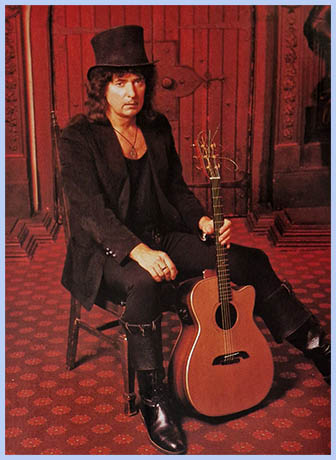 No, here's what actually happened... It all started in Germany. From that time on, I knew Ian Gillan's voice was going to give out, and in fact, it completely gave out on the fourth day. I thought that if we were going to film a video, we should have him sing properly. Otherwise, as usual, he would just be growling. The tour was scheduled to last two to three months, but I told BMG and management, "Let's film during the first two to five days. If we film early, we can promote 'Anya.' It looks like it's going to be a hit in Japan and other regions, so promoting it on TV will work well." There was talk of filming in Manchester, but Manchester was the very end of the tour. Two months later, the freshness of the record is gone. It's too late to film a video then. The video should be ready when the single is released. But they wanted to film the video two months after the single came out. I didn't like that. In two months, Ian's voice would be completely gone. But management said it didn't matter. When I asked what they meant, they said, "Even if Ian can't sing, we'll just loop the first verse, so it doesn't matter." I said, "But wouldn't it be much better if he can actually sing and we do it now?" but I was shut down. Everything was just a rejection. I said, "Let's just do it right now," but nobody would listen.
And on the actual day of the live recording, I saw cameras on the stage. I had already made up my mind that I didn't want anyone on stage with me, whether close to me or far away. I didn't mind filming the live show itself, since I no longer had any interest in that band anyway. But that night, I noticed there were a lot of cameras on stage. TV cameras tend to think they own the place and get in the way of the audience. I am playing for the audience, but the cameras get right in the middle and disrupt things. People pay money to come here. To pay money just to look at a camera is not fair. There were three cameras on the stage, and I had warned them, "As long as there are cameras on the stage, I will not play." But when the intro to "Highway Star" started and I was about to go out on stage, I saw a camera on the stage. I said, "I'm not going out until that camera is brought down," and I stayed backstage dancing along to the song. The other members kept playing. Colin Hart (the tour manager) came backstage in a panic and said, "The camera is gone," so I said, "Alright then, I'll go," and walked out. The audience cheered. But when I looked, there was still a camera there. So I went back. I went out once and then disappeared again. I said, "You told me the camera was gone!" They told a bunch of lies just to get me out on stage. The band seemed to think that as long as I just got out on stage, I would keep playing even if I noticed the camera, but I wasn't going to do that. As long as there is a camera, I'm not going out. So I pulled back twice. The poor ones were the people in the audience. They were a wonderful audience, but seeing me go in and out, they must have wondered what on earth was happening. They must have thought so. I felt sorry for the audience, but as long as there were cameras, I couldn't play. Actually, I had injured my foot. During the show at the Hammersmith Apollo the night before, I jumped off the stage and hurt my ankle, and the doctor told me not to play that night. My ankle was completely swollen. But I insisted I had to play, so I had it taped up. They immobilized it with tape all the way from my knee to the bottom of my foot. That was the state I was in. I was furious because nobody cared about what I was saying. In that state, I saw the cameraman from the stage. So I threw water at him. If water gets into the camera and ruins the tape, they have to stop filming, you see. I'm pretty sure it was water; it shouldn't have been beer. That water hit the lens, and some of it splashed onto Ian Gillan's wife. She made a massive fuss shouting "Oh!", but I had absolutely no intention of splashing her. She just happened to be standing right between the camera and me. It was an accident. Yet she kept telling Ian, "Blackmore threw water on me." I was waiting for Ian Gillan to come over and say something to me. If he had, I would have absolutely fired him on the spot. I would have dismissed him without a doubt. But he never came to say a word. I witnessed his wife claiming I did it on purpose, but it wasn't intentional. Well, whatever — I don't care, and I don't like her anyway (laughs). No, it wasn't on purpose. If I had meant it to be on purpose, I would have aimed it straight at her face! (laughs). I aimed it at the cameraman. At that moment, I was extremely angry. Neither management nor the stage crew tried to help me out. The whole situation was crazy. Yet I was still trying to keep the show going. That was the worst part. When that happened two years ago, I was incredibly angry. I absolutely despised the way those cowards operated. They should have taken a firmer stand. Still, looking at how a band functions is quite amusing. A band is essentially a business that involves a massive group of people, and watching what people do is entertaining — as long as the music is going well, that is. If the music is good, I am satisfied. If the music is bad and it's just a crowded room, a change is needed. It has to be good music. But if the venue is packed and thriving, the others don't seem to care about any of that. Their attitude is, "We're making money, so why should we care about anything else?" To me, money isn't everything. If it's just about money, the audience won't come back. They are watching us because they paid, but if the performance is terrible, they will never return. The others just don't understand that. They are satisfied as long as they make money tonight, and they don't care if the music is awful. That mindset—that as long as it's full house, it's fine — is something I cannot tolerate. With this, I am sure all the fans will understand why you acted the way you did. Deep down, I think everyone understands the truth. Anyone with a shred of intelligence can figure out what is actually happening without me saying a word. That is my way of thinking. True fans who have watched everything unfold up to this point must have realized it. Fans aren't stupid. I am talking like this now, but in reality, maybe there isn't even a need to speak? Everyone knows the truth... that's how I see it. If I am a fan of someone, I try to read between the lines. If someone leaves a band, you want to know why they left, but I don't believe what the remaining members say. You can naturally understand the feelings of the person who left. The remaining people are just jealous or angry, so they're never going to say, "It's wonderful that he left." You have to read into that part. That is very true. Of course, letting people know the facts as they are makes it meaningful, so I'll talk more (laughs). When people heard you were reforming Rainbow, many assumed, "The singer will be Joe Lynn Turner," especially since the bass player and drummer were guys from Joe's band. I think many are wondering why Joe isn't in this band? I think putting Joe in my band would have been an easy thing to do, and I was interested initially, but unfortunately, Joe hasn't been singing very well lately. If Joe were singing well, I wouldn't have let him leave Deep Purple. But he wasn't singing well. I simply said, "Joe isn't singing well, so let's look for another singer," but the other members wanted to bring Joe Lynn Turner back regardless of whether he sang well or not — though I didn't realize it at the time. At any rate, regarding Joe Lynn Turner... I pray that his voice comes back. He used to have a magnificent voice when he was singing properly. However, over the last two or three years, he hasn't been singing well. I don't know the reason, but I suspect he's been partying too much. I hope he gets his old voice back. Hearing the Mother's Army album, I also felt that Joe's voice had changed... What's that? Mother's Army. The band with Carmine Appice on drums and Bob Daisley on bass. Never heard of it... When was this? Right after Joe left Deep Purple. So you noticed the change in his voice too? I thought so... It has nothing to do with his personality. Joe is a good guy. But if he can't sing, there's nothing you can do. It got pretty bad. Whether it's drugs or whatever he's doing, I don't know... Many people think that if you're reforming Rainbow, you should have Ronnie James Dio as the singer, but Ronnie's voice wasn't that great either when he returned to Black Sabbath. It's interesting how voices change. I think as people get older, they gradually lose their voice. Ian Gillan lost his voice, and Joe lost his voice too. It's strange. I haven't heard Ronnie's voice recently, but... Ronnie is great with powerful songs, but he isn't suited for singing sentimental love songs. That was where he and I had a difference of opinion. He was perfect for songs like "Mistreated," but he probably couldn't sing a song like "Street of Dreams." Since I like both "Mistreated" and "Street of Dreams," I need a singer who can handle both. In that regard, Doogie (White) is good. So far, he can sing both love songs and powerful tracks. We interviewed Doogie, and he mentioned going to a Deep Purple backstage party and handing you his tape. Did you listen to it right away? No, I never listened to it. When I told Candice, "We need to find a singer. Who do you think would be good?", she pulled one out from the tapes I had and played it for me. I thought, "This guy is good. But who on earth is Doogie White?" There was a phone number on it, but I couldn't even remember where I had obtained the tape. Anyway, he was so good that I called him up and said, "Why don't you come over here? Let's see if we can do something together and see how it goes." So he came over, and I really liked his singing style. That's how it was decided. It all started with that one little tape Candice found. As a result, a fantastic new Rainbow album has been made, so we really have to thank Candice. Absolutely. She has done so many things for me over the last two years. She really helped me. Back when I was in Deep Purple, there were times I actually thought, "Am I going crazy?" because nobody understood what I was seeing. Even when I thought, "Ian Gillan is awful tonight," nobody else noticed. Everyone around us just wanted to secure their jobs for the next three or four months. Everyone wanted to go to Japan, and everyone wanted to keep things going. So when I asked, "How was tonight's show?", everyone would say "It was great!", and even when I asked "Wasn't Ian Gillan terrible?", they would say "He wasn't bad." I couldn't understand why everyone kept saying he wasn't bad, because as far as I knew, he was at his absolute worst. But the guitar technician, the stage manager, the lighting director—everyone just wanted to protect their livelihood. They probably knew that if they agreed with me and said "He's awful," I would say "Right? That's why I'm quitting." So everyone kept saying, "It wasn't particularly bad." I knew they weren't telling the truth. The only one who honestly told me "He was really terrible" was Candice. Hearing that made me feel relieved. I told her, "I knew it." At that moment, I realized my head wasn't going crazy. It's wonderful to have someone like that around. She watched the singing every night and told me how bad he truly was. I thanked her. Candice is also doing backing vocals and writing lyrics on this album, right? Yes, she wrote the lyrics for four songs: "Black Masquerade," "Ariel," "Wolf to the Moon," and "Hall of the Mountain King." Doogie isn't a great lyricist; he was really struggling to write them. The producer told us, "We need better lyrics," so I said, "Candice can write lyrics. I'll ask her." She wrote them up in about ten minutes, and I handed them to the producer. The producer said, "This is fantastic, let's use it." Doogie wasn't very happy about it, though (laughs). But that's life. Pat Regan is credited as co-producer with you. In reality, what percentage of the production work does Pat handle? As a producer, he does almost all of the work. I just collaborated with him to an extent and threw my tantrums. My job is to write the songs, generate the ideas, and communicate them to everyone. After that, I disappear, and he puts it on tape. I didn't sit in the studio with him the whole time. I was there a little bit, but not very often. If I stay for even 20 minutes, I get bored. He is a studio producer and exceptionally talented. He produced it, and it's almost like a decoration for my name. He is a very good producer and helped Doogie out a lot. Doogie seemed to have a tough time depending on the song, but Pat was incredibly patient, sticking with him for hours and hours, teaching him what to sing. I would get bored instantly and always say, "I'm leaving now." Pat would keep saying, "One more time, one more time," and even when I came back two hours later, he'd still be saying, "One more time, one more time" (laughs). It's amazing, I couldn't do that. Pat did a great job. You wouldn't normally notice that just by listening to the album, but it's a vital thing. He did a great job. I was surprised to see your name as a co-producer, because you once said something like, "Roger Glover is incredibly patient; he can sit in front of the mixing board and work endlessly. I could never stand that." That's exactly right. So I was surprised, thinking that this time you actually did work in front of the board too... No, I didn't do it at all (laughs). Regarding the sound production, I didn't think "Slaves and Masters" was very good. "The Battle Rages On..." had better sound, but... This album has been remastered. It is 100% improved. I think what you heard initially wasn't very good, but this time it has gotten better. What you heard was an old version; it's different from the finished product. We redid everything. It has become far bigger and richer. In my opinion... Slaves and Masters was very good. I like that one a lot. Joe's singing is superb, and I'm very satisfied with the sound. The Battle Rages On... is garbage. That one is terrible. What was the one after Perfect Strangers again? It's "The House of Blue Light." Right. The House of Blue Light, The Battle Rages On..., Who Do We Think We Are, Fireball... I don't like any of these at all. They are completely meaningless albums. I think "Slaves and Masters" was wonderful in terms of both songwriting and vocals. It's a very good album. Slaves and Masters, Machine Head, Deep Purple in Rock, and Perfect Strangers were all good. I like Bent Out of Shape too. I feel "Slaves and Masters" was an album that should have been even better. In terms of sound quality, "The Battle Rages On..." might have been superior to "Slaves and Masters," but regardless, I thought the melodies Ian Gillan sang were awful. I don't like "The Battle Rages On..." at all. I thought it was a dreadful album. I'm glad you said that. Well said. That one was terrible. (stands up, extends his right hand offering a handshake) Thank you. Everyone else is too afraid to say it, but it was awful. The worst. Everyone avoids commenting on it, but why is that? I suppose they think Ian Gillan is going to punch them or something. I haven't heard the remastered version yet, but I have no doubt that "Stranger in Us All" is a phenomenal album. Yeah. The remastered version is even better. Compared to what you've made up until now, how much better is it? It reflects my philosophy of "how music should be" much more than when I was in Deep Purple. It is my pure idea. Deep Purple's works ended up being done the way they thought things should be. But this work is what a single individual envisioned. Deep Purple was the opinion of five different people. And I'm not just talking about the songwriting. There were way too many egos in Deep Purple, and I was completely fed up with it. We couldn't decide on anything. If you tried to place a single beer down, people would argue, "Let's put it here," "No, I think over there is better," "No, let's put it this way"... if you do that, you'll never get to set it down, right? It always felt like, "How can we decide anything with this method?" But on this new album, my way of thinking is reflected, and what I believe my songs should be has been 100% adopted. There is absolutely no compromise. When I listened to "The Battle Rages On...", I felt that while the ideas were good, the songs could have been much better, which I found deeply unfortunate. With this new Rainbow album, I don't feel like you are compromising on anything, and the effort you've poured into it clearly shines through. It made me happy to think, "This is the real Ritchie Blackmore." Exactly. It is very difficult to feel fully satisfied with a recording. I always find myself thinking, "Make it better, make it better..." But this time, it came very close to my ideal. That's a great thing. Especially "Hall of the Mountain King", I think it’s the most exciting track a hard rock band could possibly deliver. It's simple yet highly effective, and I'm incredibly pleased with it. To me, this song feels like it captured everything perfectly. Rock 'n' roll can sometimes lose its musical perfection in favor of being exciting, and some songs might be musically excellent but completely lack excitement, but "Hall of the Mountain King" possesses it all. I'm very satisfied. Listening to it gets me incredibly excited. Honestly, when I heard the finished version of "Hall of the Mountain King," I got goosebumps. Listening to it on headphones sent chills down my spine. It had been 20 years since a record gave me goosebumps like that. This song and "Hunting Humans" are remarkably close to perfect. I was a bit disappointed with "Ariel" initially because the sound wasn't quite right, but now that the sound has been improved, it's great. This is my music, exactly as I believe it should be. Because it represents how Ritchie Blackmore thinks it ought to be, I'm completely satisfied with the end result. For the past ten years, I was making music just to please everyone else. Compounding, you know. It was constant compromise. Even so, I still think there were some good things inside Slaves and Masters. Why did you decide to re-record "Still I'm Sad"? We were just messing around and played "Still I'm Sad" as a joke during rehearsals. Everyone said it sounded amazing, but since I had already done it before, I felt there was no point in doing it again. However, the band members pointed out, "This is the first time we're doing a studio recording of it with vocals." Seeing how excited the band was made me think the fans would get excited too, so I said, "Alright, let's do it as a bonus track." In the end, it didn't become a bonus track but a core part of the album, and "Emotional Crime" became the bonus track instead. I'm completely fine with how it turned out now. At any rate, the last time I did it was 15 years ago, so I don't see any issue with it. I love this song. It's a great track. I think using the band name Ritchie Blackmore's Rainbow feels very natural, but you were also considering using the name "Moon". Correct? Yeah, I was thinking about it. When I started putting the band together two years ago, I was planning to name it Rainbow Moon, or something with "Moon" in it. Before it became Blackmore, my ancestors' name was Moon, and I feel a deep affinity for the moon. My fascination when looking at the moon probably stems from that. Even when sitting in a restaurant, if I catch a glimpse of the moon through the window, I often feel a sudden strike of inspiration. Anything to do with the moon feels incredibly exciting to me. That's why I was planning to use the word Moon, but when I mentioned it to the record company, they told me, "No way, it has to be called Rainbow." I didn't want to fight with the record company, so I had no choice. That's the reason it stayed as Rainbow. Honestly, I'm tired of the name Rainbow. I wanted to change it to something else. When you play live, will you still use "Over the Rainbow" as your intro? I'm considering it. There are so many people who absolutely love that opening piece. Since a vast number of fans adore it, I might end up using it. Initially, I wasn't planning to, I wanted to do something completely fresh — but since it's been ten years, the opening I reconsidered that it would be fine to do it as a gig once more. If it's something the fans are enjoying, I don't want to change it. I want to keep it exactly the same. Other bands might change everything up, but I don't want to alter what everyone likes. That's the exact issue I have with one of my favorite bands, Jethro Tull. Ian Anderson does something different every single time. He overdoes it. I want to see what he's done up to this point, but he won't do it. He changes every time. I used to think that doing things that way would end up damaging him. But right now, he doesn't seem to realize what he's doing himself. It feels like he's missing the mark, which is disappointing. Still, Ian Anderson is always bursting with ideas. That's why I instinctively want to tell him, "Ian, just stick to what you're good at!" Why not just play instrumentals or do something like War Child? That stuff was absolutely magnificent... yet now I feel he's trying to do too many things and losing track of it all. Sometimes you need someone to take control — a person who pulls the whole package together, because there are things an artist just can't see. In the Rolling Stones, Mick Jagger handles everything. I've been a fan of theirs for a very long time. Of course, Ian Anderson runs everything in Jethro Tull, but managing everything completely alone can sometimes be too heavy a responsibility, so you need someone's help. Someone who can step up and say, "This is how we should do it." Since the name Rainbow has a firmly established image as "the band where Ritchie Blackmore can do exactly what he wants without compromise," I think it's a great thing that you're using the name Rainbow again. 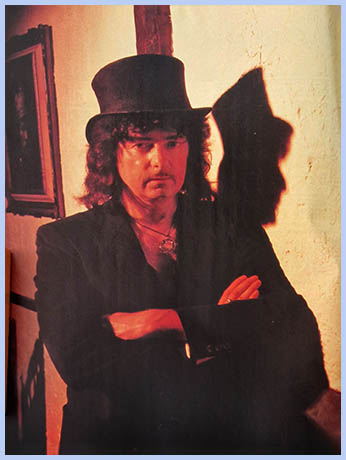 Right. I feel the exact same way. I don't compromise. I compromised back when I was a student, and I compromised in other jobs, but when it comes to playing music, I absolutely refuse to compromise. I have no desire to earn money by doing things I don't want to do just to meet other people's expectations. I follow my own feelings. Mind you... I suppose that's exactly why I get dragged into so much trouble. Maybe I ought to do what other people do — take it easy, make a bunch of money, reform Deep Purple, keep playing with the same members forever, and make everyone thrilled... maybe that's how I should think. Sounds like an old man, doesn't it?
But I just can't bring myself to do that (wry smile). I end up saying, "No, that's wrong." I'm not ready to step into a wheelchair-bound lifestyle just yet, unlike certain other people. I don't want to compromise. Because I feel there's still something left for me to do, I won't compromise going forward either. Actually, I'm working on a separate project with Candice where we do medieval music, and I haven't compromised on that either. Music isn't something you should ever compromise on. It has to come straight from the heart. I reject being dictated to by record companies. My current label lets me do whatever I want. Other record labels might tell me to do this or do that, but I do what I want to do. Yet, this approach breeds trouble. Ultimately, all I want to do is play better music, but because of the political nonsense along the way, people say things like, "He's a horrible guy," "He kicked out the drummer," "He kicked out the singer..." But look, whether it's a singer or a drummer, if they are doing their job properly, I won't kick them out. That's the crucial part. I would never say, "You're a wonderful drummer, but you're fired." If they are a fantastic drummer or singer, I'll say, "Please stay in the band. Help me keep this moving forward." However, there are far too many people who get incredibly lazy the moment they get into a famous band. They get into a "let's just have fun" mindset. Music isn't always about just having fun. Sometimes you have to go through painful experiences to find the absolute best way to do things. But that becomes the source of trouble. People hate that process, and musicians despise being told "you're fired." But if you aren't playing properly, that is your own responsibility. If I weren't playing properly myself, I'd be fully prepared for someone to tell me "you're fired." The new vocalist you found this time, Doogie White, seems to fit Rainbow's music perfectly at the moment... For this week, sure. Next week might be different (laughs). Both Graham Bonnet and Joe Lynn Turner were wonderful singers in their own right, weren't they? Oh, absolutely. How does this time compare to when you discovered Graham Bonnet or Joe Lynn Turner? In Graham Bonnet's case, we had to rush him in. He did a pretty good job on tracks like "Since You Been Gone," but that era was chaotic, and we were in a position where we desperately needed a vocalist fast. So we brought Graham in. He's a good singer, but as anyone who knows him can tell you, he’s a bit eccentric. With Joe Lynn Turner, we spent several months searching before we found him, so we knew full well how good he was. In Doogie's case, we had about a one-year trial period. We were able to take far more time to find the right person than before. I'm incredibly picky about my singers, so finding the right fit takes time. There are times when, even after recording, I think, "This doesn't sound right on this song, we need to change the singer." Personally, I don't see any need to establish fixed rules. Other people tell me you shouldn't do things that way, but I honestly don't see why not. If I don't like it, I search for a perfect match. I simply can't do what others do — putting up with it and spending a lifetime stuck with someone just because they're a member of the same band. It always comes back to the point of not compromising. Funnily enough, every single singer who has been with me has their good points. But they have their weak points too. Looking back at the timeline around the release of "Difficult to Cure," it’s officially stated that Graham Bonnet remained a member of Rainbow and went into the studio for the "Difficult to Cure" recordings, but suddenly flew back from Denmark to L.A in the middle of it, forcing the band to rush out and find a replacement, which led to Joe Lynn Turner. Were you actually taking your time looking for the next singer beforehand? Yeah. Joe Lynn Turner had been locked in long before Graham Bonnet ever quit. But Graham just wouldn't quit (laughs). So we were saying, "Look, if Graham absolutely insists on not quitting, let's just go forward with two singers!" (laughs). I always thought the dates looked bizarre. It felt way too fast for you to have found someone after Graham Bonnet had already left... However, according to a certain biography, when Graham said he was quitting, you allegedly asked him to stay? No (laughs). According to Graham, when he returned to L.A and said he was quitting, you were in a massive bind... and you later begged him to stay in the band, but he refused. He refused what? Refused to come back to Rainbow. That's completely wrong. To give you the other side of the story, I was utterly fed up with Graham. The guy was living in a completely different world. He had zero vision of what he wanted to do; he just constantly complained, "I hate this," "I don't want to sing that..." Even when I asked him, "Alright, then what do you want to do? Tell me so we can do it," he would just stand there silently and shrug his shoulders... (wry smile). I wanted a different singer. So I found Joe, went to management and asked, "What should we do about Graham?", and it was decided we'd tell him to leave since we found a new singer. But Graham refused to quit. He said, "I'm not quitting." When he asked, "What happens if I don't quit?", I told him, "Well, then we'll just have two singers on stage" (laughs). I told him, "Even if you don't quit, the band is bringing in another singer who is going to sing all the songs, but you're welcome to stay if you like." At that, he just said, "Alright." (laughs). Graham is a very bizarre guy. Mind you, everyone sounds bizarre in their own way, right? Everyone is crazy. Two years ago, watching Paul Rodgers' show, it confirmed for me that he is as spectacular as ever. Oh yeah, he is a phenomenal singer. Do you still think that if the opportunity arose, you'd want to form a band with him? No. Paul is completely set in his ways. He's probably too much like me. He doesn't compromise. I love Paul Rodgers as a singer; I think he's a brilliant vocalist. Lou Gramm is a wonderful singer too. But I get the feeling Paul is just too unyielding in his specific way of doing things. I don't think I would ever work with Paul Rodgers. Even if the opportunity came up... if he and I teamed up, we'd probably be throwing punches at each other from day one (laughs). And he'd probably win (laughs). I prefer to keep my distance. Hearing Paul Rodgers sing, I used to think he was the greatest singer in the world. I don't want to become an insider; I just want to listen to him. So you're incredibly satisfied with your current situation? Yeah. I'll probably be satisfied for the next six months. After that, it'll probably change (laughs). I heard you came up with the album title "Stranger in Us All"? Yeah. It's a line from the lyrics Candice wrote for "Black Masquerade." When I was trying to come up with a title, I actually had a different one in mind... what was it again... right, I think I was calling it Black Masquerade for about a month. But the record company told me, "That's not a very good title, think of something else," so I re-read the lyrics to "Black Masquerade." Inside, there was the phrase "stranger in us all." To me, that seems to perfectly capture the feeling that there is a complete stranger living inside the person you are talking to. It makes you feel like, "Haven't I had this exact conversation with someone else who isn't standing here right now?"... Do you get what I mean? It's a spiritual thing. I think a lot of people listening to this conversation right now will understand. Meaning, the stranger that lives inside us all. I think it's another facet of the ego. Just like I mentioned to you last night, everything is constructed out of two opposing elements—like Yin and Yang, or black and white. For a child growing up, I think the person they talk to inside is that stranger within themselves. When you're walking past a house, pick up a rock, and throw it at the window, the voice that tells you, "Yeah, go ahead and throw that rock," is the stranger inside you. At the same time, another stranger speaks up and says, "That's wrong. You shouldn't do that." It's complex. This is purely my own interpretation, and I'm sure different people take it in different ways. Well, it looks like we're out of time... A massive number of Japanese fans are eagerly awaiting your return to Japan. I'd be glad if people can look at both sides of the coin (laughs) © BURRN Magazine no 11 - November 1995  |